
UK Gambling Casino Sites for Slots: What to Check
 Available in GB

A practical look at licensing, slot mechanics, withdrawals, bonuses and player controls on UK gambling sites.
Table of Contents
- What Makes a Casino Site Suitable for Slot Play
- UK Online Slots: Stakes, Spin Speed and Game Access
- Real-Money Slots: RTP, House Edge and the Cost of a Withdrawal
- Slot Machines and Progressive Jackpot Mechanics
- Responsible Gambling Controls and Jackpot Chasing
- Casino Apps: Checking the Terms Behind Mobile Play
- UK Online Slot Rules and Player Information
- Free Slots, Free Spins and Their Payout Limits
- Bonus Offers: The Turnover Before Withdrawal
- New UK Casino Sites: Checking Certification and Compliance
What Makes a Casino Site Suitable for Slot Play
A suitable slot site is not defined by the size of its game catalogue or the prominence of its homepage offers. The first test is whether it is authorised to serve players in Great Britain. Only licensed sites can provide gambling services in the UK, and remote operators serving the British market must hold the relevant Gambling Commission licence. That makes authorisation a threshold condition, not a decorative badge.
The UK Gambling Commission (UKGC) sets requirements intended to support fair play, transparency and player protection. A licence places an operator within that regulatory framework. It does not make every site identical, nor does it mean that every aspect of the experience will suit every player. It does establish a necessary basis for comparison: an unlicensed site falls outside the UK system, so its claims cannot be assessed on the same footing.
Start with the operator, not the game list
A long catalogue can be useful, but it does not answer the basic question of who is providing the service. The operator should be identifiable, and its UKGC authorisation should be clear enough to verify rather than implied by general wording about security or fairness. A licence statement that cannot be tied to the business behind the site is not much of a check.
Choosing a UK slots site involves more than browsing games: payout timing is one practical detail worth checking. This list gives a concise reference for the operators with the payout information available.
1. SpinFormula
Payout speed: 1-3 business days SpinFormula lists a payout speed of 1–3 business days.
2. NightWin
Payout speed: 1-3 business days NightWin lists a payout speed of 1–3 business days.
3. Revery Play
Payout speed: 1-3 business days Revery Play lists a payout speed of 1–3 business days.
4. BeOnBet
Payout speed: 1-3 business days BeOnBet lists a payout speed of 1–3 business days.
5. Dieselwin
Payout speed: 1-3 business days Dieselwin lists a payout speed of 1–3 business days.
6. WinBeast
Payout speed: 1-3 business days WinBeast lists a payout speed of 1–3 business days.
7. Britsino
Payout speed: 1-3 business days Britsino lists a payout speed of 1–3 business days.
8. x3bet
Payout speed: 1-3 business days x3bet lists a payout speed of 1–3 business days.
9. Amunbet
Payout speed: 1-3 business days Amunbet lists a payout speed of 1–3 business days.
10. EvoSpin
Payout speed: 1-3 business days EvoSpin lists a payout speed of 1–3 business days.
This distinction matters because games and the casino interface may be supplied by different businesses. A familiar slot title does not, on its own, establish that the site offering it is authorised. The operator’s status is the relevant starting point for UK players; the presence of a recognisable game is not a substitute.
Once that threshold is met, the remaining assessment is practical. The site should make its rules and account information easy to locate, present the games in a usable way, and explain how to reach customer support. These are service-quality checks rather than proof of regulatory status. Clear presentation reduces the work required to understand what the operator is offering; vague menus and scattered terms increase it.
Fairness depends on more than a promise
Random number generation is central to how a digital slot determines game outcomes. A site’s general assurance that its games are fair is less informative than the underlying testing requirement: UKGC-licensed operators must use a certified random number generator examined by an independent, approved testing house.
That arrangement separates the testing from the operator’s own marketing. The operator is responsible for using a certified system, while an approved independent body examines it. This is a concrete standard to look for when assessing how fairness is supported. It is not a promise that a particular player will win, or that a session will produce a predictable result. Random outcomes do not become predictable because the system has been tested.
Low-Volatility Slots in the UK: How They Work
The distinction also prevents a common category error. Certification concerns the integrity of the random number generator; it does not make a particular slot more favourable to an individual player. Nor does a game’s popularity establish that its outcomes have been independently examined. The relevant question is whether the operator uses a certified RNG that has undergone the required independent assessment.
Compare the service around the games
After authorisation and fairness controls, the site can be judged on how well it communicates. Important information should be accessible without having to infer it from promotional language. A good comparison therefore looks beyond the lobby: are the operator’s identity and regulatory status apparent, are the terms organised coherently, and can account and support information be found without unnecessary searching?
Game access is another practical consideration. A catalogue should be navigable, with titles presented in a way that makes browsing manageable. The number of games alone is a weak measure: a larger selection has little value if the interface makes it difficult to locate or understand what is available. Clear game information supports comparison; visual polish does not replace it.
Support also belongs in the assessment. Contact routes and help material should be visible, and explanations should be direct enough to answer routine account or site questions. This does not establish that every query will be resolved in a particular time. It does show whether the operator has made its support arrangements legible to customers.
Do
- Verify the operator holds a UKGC licence
- Check for certified RNG testing
- Locate clear terms and support info
Don’t
- Rely on the size of the game list
- Trust general claims of fairness
- Assume a known game proves authorisation
The result is a two-stage standard. First, establish that the operator is licensed for the British market and that its slot systems meet the independent RNG testing requirement. Then assess the practical service: clarity, navigation, game access and the visibility of support and terms. This gives a more defensible basis for comparing online slot sites than relying on catalogue size or promotional presentation alone.
UK Online Slots: Stakes, Spin Speed and Game Access
Online slot play in Great Britain is shaped by rules about who may play, how much may be staked on a game cycle and how quickly a spin can run. These are operating conditions, not settings that a casino can remove from its games. A site’s interface may offer different stake buttons or presentation options, but the applicable limits remain in force.
Stake limits depend on age
The maximum stake for an online slot game cycle is £2 for a customer aged 18 to 24. For customers aged 25 and over, the cap is £5 per cycle. The distinction is based on the player’s age, so a slot catalogue does not have one common maximum that applies to every adult.
A stake is the amount placed on a game cycle. The cap does not mean that every spin must be made at the maximum, and it does not set a required stake. Lower stake options remain a matter of the game and site interface. The practical point is that a selection above the legal ceiling cannot be treated as an available stake for the relevant age group.
The slot limits should not be carried across to other casino games. Roulette and blackjack are not online slots, and the slot stake caps do not apply to them. The distinction matters when a casino presents several game types in the same lobby: rules for a slot cycle are not a general casino-table limit.
Hi-Lo Casino UK: Rules, Odds and Game Types
A spin cannot be accelerated or automated
Online slot spins in Britain must last at least 2.5 seconds. This sets a minimum duration for the game cycle; it is not a promise that every spin will take exactly that long. A site cannot lawfully offer a faster slot spin simply because a player wants a quicker sequence.
Autoplay is also banned for online slots in Britain. A player must not be able to start a run of spins and leave the game to repeat them automatically. Each cycle therefore requires an individual action, rather than an automated sequence governed by a chosen number of spins or stopping point.
These restrictions affect the shape of a session. They do not make the outcome predictable, and they do not change the stake cap. A permitted stake remains subject to the age-based ceiling, while the minimum spin duration and autoplay ban govern how cycles proceed. A fast-looking interface cannot override those operating rules.
Stake Limits by Age
Customers aged 18 to 24 have a maximum stake of £2 per game cycle, while those aged 25 and over have a cap of £5 per cycle.
Access depends on the operator’s authorisation
Online gambling is legal in Great Britain when it is provided by an operator holding the relevant UK Gambling Commission licence. That requirement applies to remote operators selling gambling to customers in the British market, including operators based elsewhere. A site’s availability on a phone or computer is not, by itself, evidence that it is authorised to offer real-money slots.
The same principle applies to individual games. Book of Kings can be offered to players in the UK only by an operator with a UK Gambling Commission licence. A game’s presence in a lobby is not a substitute for the operator’s authorisation.
Age is another condition of access. Online gambling is for adults aged 18 and over, and operators must verify a customer’s age before allowing a deposit. New customers must also be prompted to set a financial limit before their first deposit, with account-level limit controls available. These steps sit alongside the game rules: they do not alter the slot’s maximum stake or spin duration.
Online Casino Without ID in the UK: How Checks Work
When assessing how a session is set up, the relevant checks are therefore concrete: whether the operator is authorised for the British market, whether the stake ceiling reflects the player’s age, and whether spins run individually without autoplay. The rules apply to the operation of online slots, not merely to the wording on a game screen.
Real-Money Slots: RTP, House Edge and the Cost of a Withdrawal
Return to Player (RTP) and house edge describe the same proportion from opposite directions. RTP is the share of stakes a slot is designed to return over time; house edge is the share retained by the game. An RTP of 90% therefore corresponds to a 10% house edge. The UK Gambling Commission permits gambling risks to be communicated using either measure.
A stated payout percentage is not a forecast for an individual session. If a slot has a 90% payout percentage, the illustration is £90 returned for every £100 bet in aggregate. It does not mean that a player staking £100 will receive £90 back, or that any particular sequence of spins will follow the percentage. The figure describes a theoretical relationship across play, not a promised balance at cash-out.
That distinction matters when real money is involved. Results over a short session can sit well above or below the theoretical return. The RTP figure does not set a minimum withdrawal, remove transaction charges or determine how quickly funds reach a bank account. It describes the game, while the cashier terms determine what happens to the balance after play.
The balance that reaches the account
The amount available to withdraw can be reduced by a fixed fee. A specialist casino review reported a £1.50 withdrawal charge at one operator. The arithmetic is direct: that sum is deducted from the requested balance, so the same charge consumes a larger share of a small withdrawal than of a larger one. The relevant comparison is not just the fee in isolation, but the amount remaining after it is applied.
Withdrawal Fees
Fixed charges (e.g., £1.50) are deducted from the requested balance.
Minimum Withdrawals
Balances below a specific threshold (e.g., £20) cannot be withdrawn.
Processing Times
Periods range from instant to five business days, depending on the method.
Minimum withdrawal rules create a different constraint. A specialist review reported a £20 minimum at one operator. A balance below that threshold cannot be withdrawn through the stated route until it reaches the minimum, subject to the operator’s terms. A minimum is not a charge, but it can leave funds unavailable for transfer when the account balance falls short. Fees and minimums should therefore be read together, rather than treated as interchangeable details.
Processing time is another part of the cash value. A specialist comparison reported quoted withdrawal periods ranging from instant processing to five business days, with card payments commonly taking one to three days and e-wallets from zero to 24 hours. These are reported terms, not a guarantee for every transaction. Verification, payment method and operator processing can affect the route from a casino balance to money received; the stated timeframe needs to be checked for the specific account and method.
Reading the terms as one calculation
For online casino gambling for real money, a useful comparison follows the whole path: the game’s theoretical RTP, the balance available after play, any withdrawal minimum, any fee, and the stated processing time. A higher RTP does not compensate automatically for an unfavourable cash-out condition. Nor does a low fee establish that a payment will be prompt.
The calculation is especially simple where a charge is fixed: subtract it from the intended withdrawal and compare what remains with the balance that would arrive without the charge. With a minimum, check whether the balance qualifies before initiating the transfer. With a processing estimate, distinguish the operator’s stated handling time from the time until funds are actually received.
Online Casino Tournaments UK: Entry and Prize Terms
Free slot machine play can show how a game behaves without putting a cash balance at stake, but its results do not settle the cost of a real-money withdrawal. For real-money slots, game return and payment terms belong in separate columns. RTP describes a long-run game measure; the withdrawal page describes deductions, eligibility and timing. Neither figure should be mistaken for the other.
Slot Machines and Progressive Jackpot Mechanics
A progressive jackpot is a prize pool that increases as qualifying wagers are made. Each spin contributes part of its stake to the pool, rather than directing the entire amount towards the slot’s ordinary wins. The amount added depends on the game’s terms; the jackpot is therefore funded gradually through play, not supplied solely by a fixed prize advertised on the screen.
A specialist review describes contributions of 1% to 3% of each wager as a range used by progressive slots. That figure should be treated as a reported range, not a universal setting: the game’s own information is the relevant place to check its contribution and jackpot rules. The distinction matters because two slots can both display a progressive prize while allocating different shares of each stake to it.
The contribution also affects how the game’s return is divided. Return to Player (RTP) represents the theoretical share returned through play over a very large number of rounds. In a progressive slot, some of the theoretical allocation supports the jackpot pool; the remainder supports ordinary game outcomes. A lower base-game RTP does not mean the withheld amount has vanished: under the described structure, it is assigned to the prize fund. The jackpot and the base game are thus parts of one allocation, not two independent promises of return.
Progressive Jackpot RTP
A lower base-game RTP in progressive slots often means a portion of the theoretical return is allocated to the jackpot pool rather than ordinary wins.
A specialist review gives a base-game RTP range of 88% to 92% for progressive slots, while treating the share directed to the jackpot as the difference. These figures are not a specification for every title. The published RTP may refer to the base game or to a total that includes jackpot value, so the wording attached to a game matters. A percentage without that distinction can make the ordinary spin outcomes appear more generous than they are.
Mega Moolah is one named progressive slot. A specialist review reports an RTP of 88.12% for it on licensed platforms; that is a reported figure, not a guarantee of what a particular player will receive or a permanent rate across every version. The same caution applies to other named titles such as Age of the Gods and Mega Fortune: their inclusion as progressive examples does not establish that their pool structures or RTP figures match one another.
The displayed jackpot can rise while the underlying game’s ordinary return remains governed by its stated configuration. A large prize on screen is not evidence that the base game has a correspondingly high RTP. Nor does a theoretical RTP forecast the result of a short session: it describes a long-run model, whereas individual outcomes vary.
For a comparison of online slot machines, the useful details are therefore the contribution rule, the stated base-game RTP, and whether the published RTP includes the jackpot component. Those terms show what each wager is funding. Without them, a headline prize gives the size of the possible pool but not the cost of contributing to it.
Classic Slots Online in the UK: How They Work
Responsible Gambling Controls and Jackpot Chasing
Responsible gambling controls set boundaries around money and time; they do not change a slot’s outcome. All UK Gambling Commission-licensed sites offer deposit limits, time-outs and self-exclusion. These tools are part of the account, not a method of improving the chance of a jackpot.
A deposit limit restricts how much can be added to a gambling account over a chosen period. Great Britain’s rules also require remote operators to prompt new customers to set a financial limit before their first deposit and to provide accessible account-level controls. A limit is most useful when it is set before play begins: once a session is under way, changing the boundary to accommodate more gambling defeats its purpose.
Session limits and reminders address a different exposure. A deposit limit controls money entering the account; a time boundary or reminder can interrupt play before repeated spins become an unplanned extension. Loss limits provide another way to define a stopping point. None makes a losing session recoverable. A further deposit or longer session adds exposure, not certainty.
A time-out temporarily blocks access to gambling, while self-exclusion is a stronger restriction for a person who needs to stop gambling for a period or longer. These controls differ in duration and purpose, so the account terms matter. GamCare and Gamblers Anonymous are support organisations available to people affected by gambling; account tools and external support serve different functions.
Jackpot Chasing
Continuing to play to recover losses is financially risky, as previous losses do not make a future win more likely.
Jackpot chasing is financially risky because the prize is uncertain while each additional wager is immediate. A jackpot that has not arrived is not money owed to the player, and previous losses do not make a future win more likely. Continuing to play to recover a shortfall can therefore turn a defined entertainment cost into a larger one. The jackpot’s size is not a spending plan.
A practical boundary is a total amount and session length decided in advance, with deposit and session controls aligned to those limits. Once either boundary is reached, continuing for the sake of a prize changes the original terms. A time-out can create distance from the decision; self-exclusion is available where temporary interruption is not enough.
Promotions do not alter this risk. A no-deposit offer or free play may make a casino account appear to involve little immediate cost, but it does not guarantee a jackpot or remove the need for a stopping point. The relevant measure is the amount of personal money and time exposed, not the advertised prize or the prospect of recovering losses.
For mobile play, the same account controls apply as on a desktop site. A smaller screen does not reduce the cost of continued play, so limits should remain visible and usable wherever the account is accessed. Responsible gambling tools are controls over exposure, not assurances of a particular result.
High-RTP Slots in the UK: What RTP Can Tell You
Casino Apps: Checking the Terms Behind Mobile Play
A casino app is an access route to an account and its games, not a separate set of financial terms. The operator behind it remains responsible for the gambling service. For play in Great Britain, that operator must hold the relevant Gambling Commission licence; an app-store listing is not a substitute for checking who operates the account.
The same distinction applies to slot information. An app may present a game catalogue, but the relevant details belong to the particular game and its operator. Before play, the game’s information should be accessible within the app or through a clear route to the operator’s site. A polished interface does not establish what a game returns or how its information is disclosed.
One useful disclosure is a comparison between theoretical Return to Player (RTP) and actual results. A specialist review reports that a growing minority of UK operators publish monthly actual RTP figures alongside theoretical returns, broken down by game category. This gives mobile players a concrete item to look for: whether the operator reports both measures, and whether the figures are organised by category rather than presented as a single site-wide number.
The distinction matters because a theoretical figure describes a game setting, while monthly actual figures record results over a particular period. They are not interchangeable. A month’s result is not a promise about the next session, and a theoretical return is not an amount due to an individual player. On a small screen, a figure without its label or context is easy to misread; the disclosure should make clear which measure is being shown.
Mobile Disclosure
Look for operators that publish monthly actual RTP figures alongside theoretical returns, broken down by game category.
Practical checks are therefore about traceability. The app should identify the operator, provide access to its terms and account information, and make the game’s own information available. If the app directs players to a browser page, the operator and account should remain identifiable there. If a return figure appears, its category and whether it is theoretical or actual should also be clear. Missing detail is not evidence of a favourable term; it is simply information that cannot be assessed.
Age requirements apply to mobile access as they do elsewhere: online gambling in Great Britain is for adults aged 18 and over, and operators must verify age before allowing deposits. The app should not obscure the operator’s identity or make the underlying terms harder to reach. In practical terms, the useful comparison is not between app icons or screen layouts. It is between the operator, the game information and the disclosures available through each route.
UK Online Slot Rules and Player Information
Return to Player (RTP) is a way of describing a slot’s theoretical return across play, but the label alone does not make the information straightforward. A percentage can look precise while leaving the player unsure what period it covers, how it relates to an individual spin, or whether it predicts what will happen in a particular session. It does not: a stated RTP is not a promise about a specific result.
A UK Gambling Commission study published in 2014 found that some people unfamiliar with gambling did not understand how RTP works. The research identified several reasons: technical language, mathematical ideas and the way the information was expressed in English. Those are practical barriers, not merely differences in reading preference. A player may recognise a percentage and still misunderstand what it represents.
The distinction between a long-run measure and an individual outcome is central. Slot results vary, and an RTP disclosure does not tell a player when a return will occur or how much a session will produce. Reading the figure as a forecast for the next run of spins turns a statistical description into a prediction it was not designed to provide. That is a category error with a neat-looking percentage attached.
The UK Gambling Commission permits gambling risks to be explained using either RTP or house edge. These are two ways to express the same relationship, but the wording can change what appears most prominent. An RTP figure describes the theoretical share returned; a house-edge figure describes the share retained by the game. Comparing disclosures therefore requires checking which measure is being used, rather than treating differently named percentages as directly equivalent without interpreting them.
Disclosure can also vary by game. Some software developers publish RTP information for their slot machines, while others do not. The absence of a figure on a game page should not be mistaken for a different meaning of RTP; it means that the relevant information is not being presented there. On UK Gambling Commission licensed casinos, the useful distinction is between a clearly stated measure and one that is difficult to locate or interpret.
Understanding RTP
Theoretical RTP is a long-run statistical measure, not a forecast or guarantee for any individual session.
A careful reading separates three things: the label, the theoretical meaning attached to it, and the limits of what it can say about an individual result. That approach keeps RTP information useful without treating it as a forecast. It also makes comparisons more reliable: the same measure must be understood on the same basis before figures can be meaningfully set alongside one another.
Free Slots, Free Spins and Their Payout Limits
Free-play slots and promotional free spins are not the same offer. Free-play access lets a player use a slot without staking cash; it is a way to try the game, not a route to a withdrawable balance. Promotional free spins, by contrast, are granted under an operator’s offer terms. Any winnings may be subject to conditions, including a maximum cash amount.
That distinction matters when assessing what an offer is worth. A game can show a balance after free spins, but the displayed figure does not establish how much can be withdrawn. The terms may set a cap, require a qualifying account action or restrict which games are eligible. The amount available for withdrawal is determined by those conditions, not by the total shown during play.
Specialist reviews report that free-spin winnings are often capped at £50 to £100. Where that kind of cap applies, a jackpot-sized result cannot be paid in full: the maximum permitted amount takes precedence. The cap is a term of the promotion, not a feature of the slot itself, so it needs to be checked for the particular offer. A high potential prize in the game does not override a lower promotional limit.
No-deposit offers require the same distinction between a win and a payable amount. A specialist review describes maximum withdrawal caps on no-deposit winnings as nearly universal, with reported limits commonly in the £50 to £100 range. These figures describe what that type of review has found; they are not a fixed rule for every operator or promotion. The actual offer terms determine the applicable ceiling.
A useful comparison therefore records the amount that can be withdrawn, any eligibility conditions attached to it, and whether the offer is free-play access or a promotion. If a cap applies, winnings above it do not increase the amount payable under that offer. This is particularly relevant where a free-spin promotion is attached to a slot with a progressive jackpot: the game’s advertised prize and the promotion’s payout limit are separate figures, and the latter may restrict what the player receives.
For a UK player, safer gambling also depends on dealing with a licensed operator and treating promotional play as a limited offer rather than cash already held in an account. The practical value is the amount available after the stated terms are applied. Anything beyond that is a displayed result, not a withdrawal entitlement.
Bonus Offers: The Turnover Before Withdrawal
A casino bonus has a face value and a release condition. The face value is not necessarily withdrawable cash: wagering terms can require a specified amount of eligible stakes before a balance becomes available for withdrawal. The key distinction is whether the multiplier applies to the bonus alone or to the deposit and bonus together. Those bases produce different turnover totals, so the wording matters more than the headline percentage.
Bonus Wagering
Identify the Base
Determine if the multiplier applies to the bonus only or the deposit plus bonus (e.g., £50 bonus).
Apply the Multiplier
Multiply the bonus by the wagering requirement (e.g., £50 × 35).
Calculate Turnover
Determine the total amount of eligible stakes required before withdrawal (e.g., £1,750).
A worked example in a specialist review describes a 100% match on a £50 deposit, with wagering set at 35 times the bonus only. The bonus is £50, and the required turnover is £50 × 35 = £1,750. The calculation concerns stakes placed, not a target profit and not the sum that can later be withdrawn. If the same multiplier applied to a combined deposit-and-bonus balance, the amount subject to wagering would be larger; the example does not describe that condition.
A separate specialist review describes wagering requirements of 40 to 60 times as standard. On a £10 bonus, that range translates into £400 to £600 in turnover before withdrawal is possible. This is a description reported by that review, not a fixed rule for every offer. Each online casino bonus offer in Great Britain needs to be assessed against its own terms: the multiplier, the balance to which it applies, which games count, and any deadline or withdrawal restriction.
The arithmetic is straightforward once the base is clear: eligible bonus amount multiplied by the wagering multiple. The practical difficulty is that a large turnover requirement can consume the bonus balance through successive stakes without producing a withdrawable amount. Turnover is not money returned to the player, and completing it does not by itself establish the final cash balance.
That differs from free-spin and no-deposit offers, where the restriction may instead be a cap on winnings or on the amount that can be withdrawn. A specialist review describes free-spin winnings as commonly capped at £50 to £100, and no-deposit winnings as commonly subject to a maximum withdrawal cap in the same range. These are reported offer patterns, not universal terms. A cap limits the eligible payout; wagering determines how much must be staked first. Where both conditions appear, both can apply, and satisfying one does not remove the other.
Best Video Slots in the UK: How They Work
New UK Casino Sites: Checking Certification and Compliance
A recently launched casino has no operating history to assess, so its legal status is the first check. Remote operators offering gambling to customers in Great Britain must hold the relevant Gambling Commission licence, wherever the business is based. Only licensed sites can legally provide online gambling services in the market. A polished launch, a large game catalogue or a prominent brand does not replace that authorisation.
The licence should be identifiable as belonging to the operator running the site, not merely mentioned in general terms. The details displayed should make it possible to establish that the business is authorised to serve Great Britain. If that link between the site and its operating company is unclear, the site’s newness makes the gap more consequential: there is little operating history to offset uncertainty.
Game fairness also depends on how outcomes are generated. UKGC-licensed operators must use a certified random number generator examined by an independent, approved testing house. A new casino should therefore provide evidence connecting its games or software to independent testing, rather than relying on a statement that play is fair. Testing organisations such as eCOGRA, GLI and iTech Labs operate in this field; a name alone is not proof that a particular casino’s RNG has been examined.
The useful evidence is specific: the testing body, the certified system or game software, and a certificate or other verifiable record. The operator’s licence and RNG testing answer different questions. The licence establishes that the business may serve the market; independent examination addresses the random system used to produce game outcomes. One does not substitute for the other.
For new UK online casinos, those checks are more informative than launch claims. Where authorisation cannot be verified, or independent RNG testing is asserted without supporting evidence, the central due-diligence questions remain unanswered.
How fast are progressive jackpot withdrawals paid out?
UK operators quote withdrawal times from instant to five business days. E-wallets commonly take 0–24 hours, while card withdrawals often take one to three days.
Are there any age restrictions for playing Mega Moolah?
Yes. You must be at least 18 to play.
What should I look for in a progressive jackpot slot?
Check how much of each wager goes into the jackpot: progressive slots typically contribute 1%–3%. This contribution can leave the base-game RTP in the 88%–92% range.
What are the online slot stake limits in Great Britain?
The maximum stake per game cycle is £2 for players aged 18–24 and £5 for players aged 25 and over.
How does fair play work in UK online slots?
UKGC-licensed operators must use certified random number generators examined by an independent, approved testing house. This supports fair and random outcomes but does not guarantee a win.

Real Dealer Games: Bounty Reels UK Live Casino 2026
Bounty Reels UK Guide UK live casino information Bounty Reels includes a live casino category,...

Aviator Casino Game in the UK: Regulation and Play
A guide to UK regulation, crash-game mechanics, bonus terms and the limits of claims about...

3-Reel Slots in the UK: Formats and Play
A guide to three-reel layouts, free play, game features and the role of the casino...

5-Reel Slots in the UK: How Bets and Reels Work
See how five-reel layouts, qualifying patterns, demo play and real-money stakes shape a slot session....

Bonus Buy Slots in the UK: Demos and Real-Play Costs
Explore bonus-buy controls, simulated features and the factors that affect the cost and feel of...

Online Keno Payouts: Paytables, Odds and Draws
Keno outcomes depend on the numbers selected, the random draw and the game's paytable—not on...

UK First-Deposit Casino Bonuses: Terms Explained
A framework for assessing eligibility, qualifying deposits, activation steps and the restrictions that shape a...

High-Volatility Slots UK: How Their Risks Differ
High volatility affects how wins are distributed over time, while reel layout, bet settings and...

Keno Casinos in the UK: Rules, Odds and Payouts
Learn how picks and draws work, why past results offer no edge, and which paytable...

Live Casino UK: How Online Live Play Works
Live casino play pairs a real-time dealer broadcast with software that records bets and displays...

Low-Volatility Slots in the UK: How They Work
Low volatility usually means smaller wins occur more often, but it does not guarantee a...

Online Slot Payout Percentages: What RTP Means
A payout percentage compares stakes with theoretical prizes over play, not the amount a player...

Progressive Jackpot Slots: How Pools Work
Progressive slots direct part of wagers into growing prize pools, while eligibility and payout terms...

Best RTP Casino Slots UK: Understanding Slot Returns
See how theoretical return, volatility and game information shape comparisons between online slots without treating...

High-RTP Slots in the UK: What RTP Can Tell You
RTP is a theoretical long-run measure, so published figures cannot predict a session or an...

Best Video Slots in the UK: How They Work
A practical guide to slot mechanics, free play, licensed sites, mobile sessions and the costs...

Casino dice games in the UK: odds and play
A guide to random outcomes, house advantage, demo play and the differences between UK and...

Chicken Road Game in UK Casinos: What to Check
A practical guide to distinguishing a game description from confirmed details about its mechanics, availability,...

Classic Slots Online in the UK: How They Work
A practical guide to classic slot layouts, demo play, machine features and the checks involved...

Crash Casino Games in the UK: Format and Access
Crash games are a format label; availability, regulation and payment options depend on the specific...

Crazy Time Live Casino Game Show in the UK
Crazy Time pairs real-time studio footage with an online betting interface, while casino terms and...
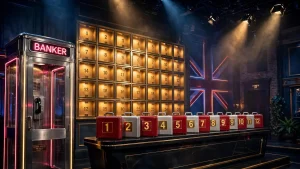
Deal or No Deal Casino UK: Slot Features Explained
The slot begins with a three-ring qualification condition, followed by an optional Top Up and...

Live Dream Catcher Casino UK: What to Know
The guide distinguishes studio-streamed dealer play from computerised games and explains what to check when...

Fastest payout online casinos in the UK: how to compare
A useful comparison defines the event being timed, its start and end points, and the...

French Roulette Online Casino UK: Rules and Odds
A practical guide to zero outcomes, payouts, table limits and the differences between French, European...

Fruit Machine Slots in the UK: How Online Play Works
A practical guide to digital reels, game features, demo play and the limits that shape...

Hi-Lo Casino UK: Rules, Odds and Game Types
Hi-Lo compares the next draw with an exposed card, while rules for ties, collecting and...

JetX Casino Game in the UK: What the Label Means
A clear look at how the slot label is used and why it cannot establish...

Live Casino Lightning Roulette in the UK
A practical guide to live feeds, roulette bets, table checks and the limits of demo...

Live Baccarat Online Casinos in the UK: How Play Works
Live baccarat pairs a dealer conducting the game in a studio with an online system...

Live Blackjack Online Casinos in the UK: Rules and Play
The guide links blackjack’s 21-or-less objective with live-table rules, casino terms, formats and practical play...

Live Roulette UK with English-Speaking Dealers
The format changes how results are produced and presented, while both games compare a number...

Mines Casino Game UK: Rules, Play and Offers
A practical guide to checking game rules, demo access, bonus terms and operator licensing without...

Monopoly Live casino in the UK: how it works
A practical guide to how live dealer broadcasts and betting controls work, with attention to...

Online Bingo in the UK: Games, Bonuses and Slots
Bingo is built around tickets, draws and patterns, while casino games have separate rules and...

Online American Roulette in the UK: Odds and Rules
Learn how the extra pocket affects roulette odds and how game format, betting terms and...

European Roulette Online in the UK: Rules and Returns
See how single-zero rules, payouts, table limits and game formats shape European roulette play. European...

Online Casino Games for Real Cash in the UK
A stake is committed before a game produces its result, while offer conditions and payment...

Online Casino Tournaments UK: Entry and Prize Terms
Tournament formats, scoring rules and prize terms differ, so check the conditions for the named...

Online Casino Without ID in the UK: How Checks Work
The guide distinguishes document-free signup language from a promise of never being checked, within UK...

Penny Slot Machines in the UK: Stakes and Play
Penny slots are classified by their lowest total spin cost, with guidance on demos, returns,...

Plinko Casino UK: Licensing, Offers and Payments
The guide examines licensing, promotional value, random outcomes and payment conditions rather than ranking casino...

Progressive Slots Online in the UK: Jackpot Guide
See how linked wagers fund jackpot pools and how those contributions relate to a slot’s...






























































































































































































































































