
Live Casino UK: How Online Live Play Works
 Available in GB

Live casino play pairs a real-time dealer broadcast with software that records bets and displays each round’s options and status.
Table of Contents
- How Live Casino Play Works Online
- The UK Rules Behind Online Casino Play
- Real-Money Play, Budgets and Payment Limits
- Checking a Live Casino Site Beyond the Sales Pitch
- Live Dealers, Table Timers and Player Conduct
- Blackjack Decisions: Busts, Ties and Insurance
- Slots, Roulette and Blackjack Do Not Share the Same Limits
- Welcome Bonuses: The Wagering Calculation
- No-Deposit Offers and the Conditions Attached
- Live Casino Offers and Poker: Check the Terms, Not the Headline
How Live Casino Play Works Online
A live casino combines a video stream with a digital betting interface. Instead of watching a fully computer-generated animation, a player sees a real dealer or presenter working at a table in a studio or casino setting. The screen carries the broadcast, while controls alongside it are used to place bets and make any choices the game requires.
The two parts work together, but they do different jobs. The camera shows the physical action; the software records the player’s selections and displays them to the table. A dealer may handle cards, spin a wheel or operate other equipment, while the interface shows the available betting options and the status of a round. The result is an online game with a visible human host rather than a sequence produced entirely by software.
That distinction is central to understanding live casino online. In an automated casino game, the software generates the round and presents its outcome through graphics, sounds and animations. In a live format, a stream shows the action as it takes place, and the game interface translates that action into information for remote participants. The presentation may feel more like observing a table than using a standalone game, although participation still happens through buttons and on-screen controls.
When choosing a UK live casino, it helps to check practical details as well as the live-game offering. The verdicts below reflect only the payout-speed information available for each operator.
1. SpinFormula
Payout speed: 1-3 business days SpinFormula has a stated payout speed of 1–3 business days. No other operator details are available here.
2. NightWin
Payout speed: 1-3 business days NightWin has a stated payout speed of 1–3 business days. No other operator details are available here.
3. Revery Play
Payout speed: 1-3 business days Revery Play has a stated payout speed of 1–3 business days. No other operator details are available here.
4. BeOnBet
Payout speed: 1-3 business days BeOnBet has a stated payout speed of 1–3 business days. No other operator details are available here.
5. Dieselwin
Payout speed: 1-3 business days Dieselwin has a stated payout speed of 1–3 business days. No other operator details are available here.
6. WinBeast
Payout speed: 1-3 business days WinBeast has a stated payout speed of 1–3 business days. No other operator details are available here.
7. Britsino
Payout speed: 1-3 business days Britsino has a stated payout speed of 1–3 business days. No other operator details are available here.
8. x3bet
Payout speed: 1-3 business days x3bet has a stated payout speed of 1–3 business days. No other operator details are available here.
9. Amunbet
Payout speed: 1-3 business days Amunbet has a stated payout speed of 1–3 business days. No other operator details are available here.
10. EvoSpin
Payout speed: 1-3 business days EvoSpin has a stated payout speed of 1–3 business days. No other operator details are available here.
What the stream does—and does not do
A live broadcast gives players a view of the table, but it is not the same as being physically present. The camera frames the action selected for the stream. The interface provides the controls needed to take part, and messages on screen may indicate when a betting round is open or when an outcome has been recorded. The dealer’s movements and the software’s status indicators are complementary views of the same round.
The stream also has a technical delay. Video takes time to travel from the studio to a device, and the interface must keep the game state synchronised with what is being shown. This is why a live table uses defined stages for accepting bets and registering decisions: the system needs a clear point at which an action is valid. A player may see the dealer continuing to handle the game even after the interface has closed the relevant choice. The broadcast is not a private, real-time conversation with the dealer.
Connection quality affects the viewing experience. A stable internet connection makes the picture and sound easier to follow; a weak or interrupted connection can make the stream pause or lose clarity. The game’s interface may continue to display information even when the video is catching up, but the exact behaviour depends on the platform. The practical distinction is between a visible interruption in the broadcast and the state of a wager or round, which is determined by the game system rather than by how smoothly the picture appears.
Low-Volatility Slots in the UK: How They Work · Bonus Buy Slots in the UK: Demos and Real-Play Costs
The role of the dealer and the interface
The dealer provides a human presence and carries out the visible procedure. They may announce stages, handle equipment and address the table, but the software remains the channel through which remote players participate. A greeting in the stream does not mean the dealer can alter a wager, extend a decision window or settle an individual account. The game follows its displayed rules and system controls.
A live interface may include a table view, betting areas, a record of recent outcomes, chat or sound controls. Those features can help explain what is happening, but they should not be treated as instructions about what will happen next. A history panel records earlier results; it does not make the next result predictable. Likewise, a dealer’s pace or manner is part of the presentation, not evidence that one outcome is more likely than another.
Automated games generally remove the human presenter and compress the round into software-generated visuals. That can make the sequence feel quicker and more self-contained. Live play gives more attention to the process on screen: the dealer’s actions, the table layout and the transition from one round to the next. Neither format changes the need to understand the rules and the stakes before participating. The difference is chiefly how the game is presented and how its actions are carried out.
Do
- Use a stable internet connection
- Check that the interface is legible
- Keep personal details out of the broadcast
- Set a budget in advance
Don’t
- Ignore muted audio or delayed pictures
- Share your screen during a session
- Trust promotional images as current availability
- Chase losses with more money
What to check before a session
A live table is a stream, so the device, sound settings and connection matter as part of the experience. A small screen can make table labels difficult to read; muted audio can remove spoken explanations; and a delayed picture can make the sequence feel less immediate. The interface should remain legible enough to show the active choices and whether a round is open. If those details are unclear, starting a wager adds uncertainty rather than removing it.
Chat and screen-sharing features also deserve care. A public message is visible to others at the table, while a shared screen can expose account details, notifications or other personal information. Keeping those details out of the broadcast is a basic privacy measure. The same caution applies to recording or posting clips: an apparently harmless capture can include information that was not meant for an audience.
A live lobby is not proof that every table shown in a promotional image is currently available. Availability can depend on the operator’s current offering and the particular session, so the live lobby is the place to confirm what can actually be opened. A description of the format explains how the service works; it cannot confirm a site’s present selection.
The format also does not make a game less financial than its automated equivalent. Bets remain bets, whether the outcome is shown through a dealer’s actions or rendered by software. Any participation should use only money that can be afforded to lose, with a budget set in advance and losses not chased. That is not a feature of the stream; it is the condition that keeps the entertainment from being mistaken for an income plan.
Keno Casinos in the UK: Rules, Odds and Payouts · Classic Slots Online in the UK: How They Work
The UK Rules Behind Online Casino Play
The UK Gambling Commission (UKGC) regulates gambling activity in the United Kingdom, including online casinos. For a live casino, the key point is that an internet connection does not place the gambling outside the rules simply because a studio, server or other equipment is based elsewhere. The Commission’s remit covers remote gambling offered to consumers in Great Britain, regardless of where the equipment used to provide it is located.
That makes the operator’s role more important than the physical location of a streamed table. A dealer may appear on screen from a studio outside the country, while the gambling service is still being offered remotely to people in Great Britain. The location of the broadcast equipment does not, by itself, remove the activity from the Commission’s regulatory scope.
What the Commission regulates
For commercial gambling in Great Britain, the UKGC is the sole regulator. Its remit includes online casino activity, rather than being limited to venues where gambling takes place in person. The same regulatory framework therefore matters when play is delivered through a website or app, whether the games are automated or presented by a live dealer.
The boundary is defined by the service offered to consumers, not merely by where the business has its offices or technical infrastructure. An operator cannot treat a live casino as outside the British framework simply because the dealer or equipment is abroad. Where remote gambling is offered to consumers in Great Britain, the Commission’s licensing requirements apply.
Remote gambling offered to consumers in Great Britain is subject to UK Gambling Commission licensing requirements, regardless of where the operator’s equipment or studios are located.
The Gambling Act 2005 governs gambling in England, Wales and Scotland; Northern Ireland is outside that Act. This distinction matters when describing the regulator’s territory: Great Britain and the United Kingdom are not interchangeable terms in every legal context. The Commission’s stated role as the sole regulator for commercial gambling applies to Great Britain, while its wider remit covers gambling activity in the United Kingdom.
Business and personal licences
The Commission issues operating licences to businesses and personal licences to individuals working in relevant roles in Great Britain. These are different authorisations. An operating licence concerns the business providing gambling services; a personal licence concerns an individual operating within the regulated sector. One does not replace the other.
For remote gambling, the relevant question is whether the service is being offered to consumers in Great Britain. The location of the operator’s key equipment does not change that test. A business serving this market must meet the applicable licensing requirements even if its technical systems are hosted elsewhere.
This also explains why a reference to a foreign licence is not equivalent to a UKGC operating licence. A licence from another jurisdiction may relate to that jurisdiction’s own rules, but it does not satisfy the British requirement for an operator serving Great Britain. The regulatory framework is tied to the market being served, not simply to the country named on a company’s paperwork.
For anyone assessing a live casino, the UKGC’s role is market-wide context: it regulates commercial gambling in Great Britain and licenses businesses and relevant individuals. It is not a guarantee that every feature, game or transaction at a particular casino has been assessed individually. Licensing establishes the operator’s regulatory position; the detail of a specific service still depends on what that operator is authorised to provide.
Online Keno Payouts: Paytables, Odds and Draws · High-Volatility Slots UK: How Their Risks Differ
Real-Money Play, Budgets and Payment Limits
Real-money play changes the nature of a live casino session. A balance used at a live dealer table represents funds that can be lost, not simply points for testing the interface. Free-play mode can show how a game is presented and how its controls work, but it does not reproduce the financial consequences of wagering from a cash balance. Results in free play should not be treated as evidence that real-money play will produce the same outcome.
For a real-money live casino session, the useful starting point is not the size of the account balance but the amount set aside for gambling. That amount should come from money left after essential costs and financial commitments, and it should be affordable to lose in full. Gambling funds should not be borrowed, taken from bill money or treated as a route to income. If losing the planned amount would affect ordinary spending, the budget is too large.
A budget works best when it is decided before logging in. It can set a firm ceiling on session spending and a point at which play ends, whether the balance has risen or fallen. Once the limit is reached, adding funds changes the original decision rather than repairing it. Keeping gambling money separate from everyday spending can make that boundary easier to maintain. So can taking a break when attention shifts from the game to recovering money already lost.
Financial Risk
Gambling funds should never be borrowed, taken from bill money, or treated as a route to income.
Loss-chasing is a financial decision made under pressure: a further stake is placed because an earlier one has gone, rather than because it fits the planned budget. There is no reliable way to make a previous loss disappear through another bet. Increasing stakes or extending a session to get back to the starting balance can turn a defined loss into a larger one. A cash budget is useful only if it remains a limit after an unfavourable run.
Payment rules set a separate boundary. UK gambling regulations prohibit credit cards from being used for gambling. A credit card is therefore not an acceptable way to fund online casino play. The restriction matters even where a payment screen displays several ways to move money: the method must be suitable for gambling, and the source of funds should not undermine the budget.
A deposit should not be confused with disposable money merely because it has reached an account. Funds placed there remain exposed to gambling losses. Before depositing, it is sensible to check the amount being transferred, the account’s available controls and whether the chosen payment route fits the spending plan. Payment options alone do not establish what withdrawal limits, charges or processing times apply, so those details should be checked in the operator’s current terms rather than assumed.
Fastest payout online casinos in the UK: how to compare
Account checks can also affect access to funds. Operators must verify a customer’s age before permitting deposits into a gambling account, and identity or other KYC checks may be underway when a withdrawal is requested. Withdrawals can be restricted during verification. This makes it important not to treat an account balance as instantly available for other expenses, and not to deposit money that may be needed on a particular schedule.
Free play has a different financial role: it can familiarise a player with the display and basic controls without putting a personal cash balance at risk. It does not remove the risk that begins when real funds are wagered. The practical distinction is simple: free play is for exploration; real-money play is spending, with losses possible. A clear budget, no credit-card funding and no attempt to chase losses keep that spending within a defined boundary.
Checking a Live Casino Site Beyond the Sales Pitch
A polished homepage cannot establish which company operates a casino, what licence it holds or whether a particular live table is available. Those details need separate checks. The useful order is to identify the legal entity, verify its licensing information, then inspect the live lobby rather than treating promotional wording as a catalogue.
Start with the operator’s terms or licensing page and note the company name, not just the brand. A casino name may differ from the name recorded by a regulator, so both need to be matched carefully. A licence badge or number on a webpage is a claim to verify, not proof by itself. Check the relevant regulator’s register for the named company and confirm that the entry is active and covers the activity being offered.
Verifying an Operator
Identify the Legal Entity
Find the company name, not just the brand, in the operator’s terms or licensing page.
Search the Register
Check the UK Gambling Commission’s register using the identified legal entity name.
Confirm Active Status
Verify that the license entry is active and covers the specific gambling activity being offered.
For a site serving customers in Great Britain, the relevant check is its operating licence in the UK Gambling Commission’s register. The company name matters: searching only a brand can miss an entry held under a different legal entity, while similar names can lead to the wrong result. If a licence claim cannot be matched to the operator, that is a material gap in the site information, not a minor design issue.
A dated example shows why the distinction matters. A specialist review reported that the Curaçao Gaming Authority listed Usoftgaming N.V. with active B2C licence CGA/2025/1353/1345. In a separate check of the UK Gambling Commission register on 25 September 2026, no operating-licence listing appeared for Usoftgaming N.V. or Hustles Casino. Those are different registers and different licensing systems; an entry in one is not a UK Gambling Commission operating licence. The date also matters because register records can change.
The lobby requires its own check. Live casino wording on a landing page does not confirm that a live dealer game is available to a particular account at that moment. Availability can depend on the current lobby, and promotional images may represent a broader product range than the active selection. Look for the live section after signing in, then check the actual table tiles and their information before relying on any stated game or format. A site should not be treated as having a particular table merely because its general sales copy mentions live play.
3-Reel Slots in the UK: Formats and Play
Useful details include the table name, whether it is marked as live, and any visible rules or limits attached to that table. This is a practical availability check, not a substitute for checking the operator’s identity and licence. The two answer different questions: the lobby indicates what appears to be offered; the register indicates whether the named business holds the relevant authorisation.
The same discipline applies to lists of leading live casino websites. Rankings and badges can compress several claims into a single label, but they do not replace checking the underlying company, register entry and current lobby. A comparison is only as useful as the details it separates. Where the operator name, licence record or live-game availability is unclear, the sales pitch has not supplied the missing evidence.
Live Dealers, Table Timers and Player Conduct
A live blackjack table is a decision-making environment, not a private game played at an individual pace. The dealer manages the round on camera while the interface collects wagers and player choices. Attention is split between the table, the countdown and the controls used to submit an action. A delayed decision can matter even when the player already knows what they intend to do.
A specialist review reported a 15-second window for placing wagers and 12 seconds for choosing whether to hit or stand at the live blackjack tables it described. Those timings are a reported example, not a standard that can be assumed for every casino or table. The countdown displayed in the current game is the practical reference. Table settings and interfaces can differ, so a player joining a new table needs to identify the controls before the next decision is due.
Wagering window 15 seconds
Decision window 12 seconds
Minimum stake £5
Maximum stake £5,000
The pace has consequences for preparation. A stake should be settled before the betting window opens, rather than chosen while the timer is running. During a hand, the relevant buttons need to be clear, and the game should be watched closely enough to register when a decision is requested. A video delay, a second screen demanding attention or uncertainty about the controls can consume a short window. There is no advantage in treating the countdown as spare thinking time.
Bet ranges also determine whether a table fits a player’s plan. The same specialist review gave a minimum of £5 and a maximum of £5,000 for the tables it covered. These are reported table figures, not a promise about a particular casino’s live lobby. The displayed minimum and maximum should be checked before joining; a table outside the intended budget is not made suitable by its atmosphere or presentation. Only money that can be afforded to lose should be wagered.
Dealer-led play includes a social layer, but it does not require constant conversation. Clear, courteous use of the chat keeps attention on the round. Insults, pressure on other players or repeated messages do not change a hand; they only add noise to a timed game. A dealer’s pace is part of the format, not an invitation to rush other players or to assume that a decision can be revisited after the countdown.
Privacy requires the same practical attention as the betting controls. Screen sharing can reveal account details, balances, notifications or other personal information outside the table. Before sharing a screen during a live stream, sensitive windows and alerts should be closed or hidden. A game interface is not a safe place to assume that everything visible is intended for an audience.
5-Reel Slots in the UK: How Bets and Reels Work
For anyone comparing casinos with live dealers, the table itself is the useful unit of inspection: its current rules, visible timer, available actions and stated betting range. The label “live dealer” says little about whether a specific table suits a player’s pace or budget. Read the displayed information first, then decide whether to join.
Blackjack Decisions: Busts, Ties and Insurance
In live blackjack, the result of a hand depends not only on how close it comes to the target but also on whether it goes past it. The key outcomes are straightforward: a hand above 21 is a bust, while matching the dealer’s total is a tie. Insurance is a separate wager offered in a specific situation; it is not a way to undo a losing hand.
When a hand goes over 21
A player who takes another card and ends with a total above 21 busts. The hand loses, and the original bet is lost. The dealer’s eventual total does not change that result: exceeding 21 settles the player’s hand as a loss.
That makes the decision to take another card consequential. A higher total may improve a hand that is still below the limit, but the same decision can push it beyond 21. The live format does not alter this rule. Whether the cards appear on a streamed table or on a screen, a bust has the same basic effect on the wager.
The useful distinction is between a hand that is merely weaker than the dealer’s and one that has already busted. A weaker hand can still be compared with the dealer’s result at settlement. A busted hand has crossed the limit and loses its bet.
Understanding the Bust
A player who exceeds 21 busts and loses their bet immediately. This result is final regardless of whether the dealer later also exceeds 21 or finishes with a lower total.
When the totals match
If the player and dealer finish with the same total, the result is a tie. The player’s bet is returned rather than won or lost. This is also commonly called a push.
A returned stake is not a profit: the hand has produced no gain on that wager. It is also not a loss, because the original bet comes back. Keeping those outcomes separate makes the final balance easier to read, especially when several hands have different results.
A tie is specific to matching totals. It should not be confused with a bust, where the player has exceeded 21 and loses regardless of whether the dealer later finishes on the same total or goes over as well.
What Insurance costs
Insurance becomes available when the dealer’s second card is an Ace. It is an additional bet, priced at half the player’s original stake. It therefore adds money at risk rather than changing the amount already wagered on the hand.
The cost can be calculated directly from the starting bet: take half of that stake to find the insurance amount. For instance, if the original wager is represented as a whole, the insurance wager is one half of it. The offer should be assessed as a separate decision, not as a refund or a reduction in the initial stake.
A live blackjack casino may present the choice while the hand is in progress, but the timing of the prompt does not change its cost. The relevant facts are the dealer’s Ace, the additional amount required and the separate nature of the wager. The exact settlement terms should be read in the table rules before play, rather than inferred from the word “insurance”.
Monopoly Live casino in the UK: how it works
Slots, Roulette and Blackjack Do Not Share the Same Limits
The Great Britain online slot stake cap is not a universal ceiling for casino play. A specialist review reports a maximum slot stake of £5 per game cycle for customers aged 25 and over. That figure applies to online slots; it does not set the permitted stake for every casino game.
Roulette and blackjack are outside that particular slot limit. A roulette wager is not subject to the slot cap simply because it is placed online, and the same distinction applies to blackjack. Live versions do not become slots by being streamed from a table. The relevant limit depends on the game, not just on whether play happens through a screen.
That difference matters when comparing the cost of a session. A slot stake is placed for a game cycle, while a table-game wager is made against the limits displayed for that table. Those limits are separate from the Great Britain online slot cap. A player should therefore check the stated minimum and maximum before joining a live casino table; the slot figure cannot be used as a substitute.
The absence of the slot cap is not a promise of unlimited stakes. Roulette and blackjack tables still have their own limits, and those may differ between tables. Nor does a higher permitted stake make a game better value. It only changes the amount that can be placed under the table’s rules. A stake limit is a boundary, not a recommendation.
Attention The Great Britain online slot stake cap of £5 does not apply to roulette and blackjack; these table games have their own separate limits.
The practical comparison is straightforward: online slots in the stated age group have a capped stake per cycle, while roulette and blackjack are not governed by that same cap. The games remain subject to their own table conditions. In a live casino, the displayed limits should be treated as part of the game’s terms, not as an extension of the slot rule.
This distinction also matters when moving between different types of play. A budget set around slot stakes may not suit a table where the minimum wager is different. The amount at risk should be assessed against the actual game and table, rather than inferred from the slot cap. Only money that can be afforded to lose should be wagered; a set budget and no chasing losses keep the financial boundary clear.
Welcome Bonuses: The Wagering Calculation
A bonus figure is not the amount available to withdraw. The wagering requirement determines how much qualifying betting must take place first, while the promotion’s terms determine which games count and at what rate.
A specialist review gives a worked example of a £100 bonus with a 35x wagering requirement. The calculation is £100 multiplied by 35, producing £3,500 in required bets before cashing out. That is turnover, not a requirement to lose £3,500, and it does not mean that £3,500 will be returned. The balance can rise or fall during play; the wagering target is a separate condition.
For a live casino bonus, the headline can overstate the practical value if table games contribute at a restricted rate. A wager on a live table may therefore clear less of the requirement than the same stake on an eligible slot. Welcome bonuses can offer reduced value to anyone who mainly plays table or live casino games, because those games may count less towards wagering.
UK First-Deposit Casino Bonuses: Terms Explained
When using a welcome bonus, focus on slots with a 100% contribution rate, and confirm that the specific games qualify under the promotion. A game’s presence in the lobby does not establish its bonus contribution. The terms set that accounting rule.
The calculation also does not settle the cash-out question by itself. A promotion may impose conditions on eligible funds and withdrawals, and withdrawals can be restricted while KYC verification is underway. The full terms should be read before opting in, including the wagering basis, game eligibility, contribution rates and any withdrawal conditions.
Bonus terms, wagering requirements and game eligibility can change. A live casino bonus offer or code is only useful if its current conditions fit the intended play; the headline amount is not enough to compare offers. Check the current promotions page and the full terms for the specific offer before signing up, since eligibility and value may vary between UK accounts.
A bonus does not alter the underlying budget. Only money that can be afforded to lose should be wagered, and chasing losses turns a promotional calculation into a larger one.
Bonus Wagering Calculation
Identify Bonus and Requirement
Take a £100 bonus with a 35x wagering requirement.
Calculate Total Turnover
Multiply the bonus amount by the requirement: £100 × 35 = £3,500.
Determine Qualifying Play
Place bets until £3,500 in total turnover is reached, noting that live casino games may contribute at restricted rates.
No-Deposit Offers and the Conditions Attached
A no-deposit promotion does not mean unrestricted access to a cash balance. It describes an offer that may be available without making an initial deposit; the operator’s terms determine who qualifies, which games count and whether any winnings can be withdrawn. Availability is not guaranteed, and an offer shown in general advertising may not apply to every UK account.
Some welcome promotions are staged: an initial no-deposit element may be followed by rewards linked to deposits. A specialist review puts the minimum deposit for welcome-offer stages typically in the £10–£20 range. That is a reported range, not a condition that applies to every promotion. The exact qualifying deposit, the stage it unlocks and any deadline must be checked in the current terms.
The headline value is only one part of the calculation. Terms can set wagering requirements, restrict eligible games or impose conditions on withdrawals. Bonus terms, wagering requirements and game eligibility are subject to change, so the current promotions page and the full terms for the specific offer should be reviewed before signing up or opting in. Eligibility and value may differ between UK accounts.
JetX Casino Game in the UK: What the Label Means
For a promotion used on casino games, contribution rates affect how much play counts towards wagering requirements. Table games and live casino games may contribute at restricted rates, reducing the practical value of a welcome bonus for anyone who prefers them. When using a welcome bonus, focus only on slots with a 100% contribution rate, and confirm the rate in the promotion’s terms rather than assuming every slot qualifies.
The label “free” also does not settle the cash-out conditions. An offer can carry restrictions on which games are eligible and what must happen before a balance becomes withdrawable. A no-deposit offer may therefore have little value if its conditions do not match the intended play.
Before signing up, check the current promotion page for availability, the qualifying action, eligible games, wagering conditions and any withdrawal restrictions. Read the full bonus terms before opting in. The offer is a set of conditions attached to a promotional balance, not cash with no strings.
Progressive Jackpot Slots: How Pools Work
Live Casino Offers and Poker: Check the Terms, Not the Headline
A live casino offer may be advertised alongside poker, but the label does not establish that either live tables or poker games qualify for the promotion. Eligibility is set by the offer’s terms: a game may be excluded, or it may contribute only partly towards wagering requirements. That distinction affects the amount of qualifying play needed and the practical value of the offer.
This matters particularly for players who prefer table games, live casino or poker. Restricted contribution rates can make a welcome bonus less useful than its headline suggests. When using a welcome bonus, focus on slots with a 100% contribution rate; other games may add less, or nothing, towards the requirement. The bonus amount alone does not show how much qualifying play remains.
Free spins also have conditions beyond the spin itself. A specialist review describes free-spins winnings as potentially capped and subject to wagering requirements. The applicable cap and any requirement depend on the specific promotion, so neither should be assumed from the advertised number of spins or the value shown beside them.
Mines Casino Game UK: Rules, Play and Offers
The same care applies to phrases such as “live casino sign-up offer” or “poker bonus”. They describe marketing, not a promise that a particular game qualifies, that a live table is available, or that winnings can be withdrawn without further conditions. Offer terms, wagering requirements and game eligibility can change, and details may differ between UK accounts.
Before signing up, check the operator’s current promotions page and read the full terms for the specific offer. Confirm which poker and live casino games are eligible, their contribution rates, and any restrictions on free-spins winnings. A promotion with narrow eligibility can have little value for someone whose preferred games do not count fully. The final figure is determined by the conditions, not the headline.

Real Dealer Games: Bounty Reels UK Live Casino 2026
Bounty Reels UK Guide UK live casino information Bounty Reels includes a live casino category,...

Aviator Casino Game in the UK: Regulation and Play
A guide to UK regulation, crash-game mechanics, bonus terms and the limits of claims about...

3-Reel Slots in the UK: Formats and Play
A guide to three-reel layouts, free play, game features and the role of the casino...

5-Reel Slots in the UK: How Bets and Reels Work
See how five-reel layouts, qualifying patterns, demo play and real-money stakes shape a slot session....

Bonus Buy Slots in the UK: Demos and Real-Play Costs
Explore bonus-buy controls, simulated features and the factors that affect the cost and feel of...

Online Keno Payouts: Paytables, Odds and Draws
Keno outcomes depend on the numbers selected, the random draw and the game's paytable—not on...

UK First-Deposit Casino Bonuses: Terms Explained
A framework for assessing eligibility, qualifying deposits, activation steps and the restrictions that shape a...

High-Volatility Slots UK: How Their Risks Differ
High volatility affects how wins are distributed over time, while reel layout, bet settings and...

Keno Casinos in the UK: Rules, Odds and Payouts
Learn how picks and draws work, why past results offer no edge, and which paytable...

Low-Volatility Slots in the UK: How They Work
Low volatility usually means smaller wins occur more often, but it does not guarantee a...

Online Slot Payout Percentages: What RTP Means
A payout percentage compares stakes with theoretical prizes over play, not the amount a player...

Progressive Jackpot Slots: How Pools Work
Progressive slots direct part of wagers into growing prize pools, while eligibility and payout terms...

Best RTP Casino Slots UK: Understanding Slot Returns
See how theoretical return, volatility and game information shape comparisons between online slots without treating...

High-RTP Slots in the UK: What RTP Can Tell You
RTP is a theoretical long-run measure, so published figures cannot predict a session or an...

Best Video Slots in the UK: How They Work
A practical guide to slot mechanics, free play, licensed sites, mobile sessions and the costs...

Casino dice games in the UK: odds and play
A guide to random outcomes, house advantage, demo play and the differences between UK and...

Chicken Road Game in UK Casinos: What to Check
A practical guide to distinguishing a game description from confirmed details about its mechanics, availability,...

Classic Slots Online in the UK: How They Work
A practical guide to classic slot layouts, demo play, machine features and the checks involved...

Crash Casino Games in the UK: Format and Access
Crash games are a format label; availability, regulation and payment options depend on the specific...

Crazy Time Live Casino Game Show in the UK
Crazy Time pairs real-time studio footage with an online betting interface, while casino terms and...
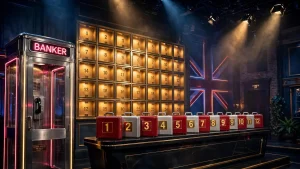
Deal or No Deal Casino UK: Slot Features Explained
The slot begins with a three-ring qualification condition, followed by an optional Top Up and...

Live Dream Catcher Casino UK: What to Know
The guide distinguishes studio-streamed dealer play from computerised games and explains what to check when...

Fastest payout online casinos in the UK: how to compare
A useful comparison defines the event being timed, its start and end points, and the...

French Roulette Online Casino UK: Rules and Odds
A practical guide to zero outcomes, payouts, table limits and the differences between French, European...

Fruit Machine Slots in the UK: How Online Play Works
A practical guide to digital reels, game features, demo play and the limits that shape...

Hi-Lo Casino UK: Rules, Odds and Game Types
Hi-Lo compares the next draw with an exposed card, while rules for ties, collecting and...

JetX Casino Game in the UK: What the Label Means
A clear look at how the slot label is used and why it cannot establish...

Live Casino Lightning Roulette in the UK
A practical guide to live feeds, roulette bets, table checks and the limits of demo...

Live Baccarat Online Casinos in the UK: How Play Works
Live baccarat pairs a dealer conducting the game in a studio with an online system...

Live Blackjack Online Casinos in the UK: Rules and Play
The guide links blackjack’s 21-or-less objective with live-table rules, casino terms, formats and practical play...

Live Roulette UK with English-Speaking Dealers
The format changes how results are produced and presented, while both games compare a number...

Mines Casino Game UK: Rules, Play and Offers
A practical guide to checking game rules, demo access, bonus terms and operator licensing without...

Monopoly Live casino in the UK: how it works
A practical guide to how live dealer broadcasts and betting controls work, with attention to...

Online Bingo in the UK: Games, Bonuses and Slots
Bingo is built around tickets, draws and patterns, while casino games have separate rules and...

Online American Roulette in the UK: Odds and Rules
Learn how the extra pocket affects roulette odds and how game format, betting terms and...

European Roulette Online in the UK: Rules and Returns
See how single-zero rules, payouts, table limits and game formats shape European roulette play. European...

Online Casino Games for Real Cash in the UK
A stake is committed before a game produces its result, while offer conditions and payment...

Online Casino Tournaments UK: Entry and Prize Terms
Tournament formats, scoring rules and prize terms differ, so check the conditions for the named...

Online Casino Without ID in the UK: How Checks Work
The guide distinguishes document-free signup language from a promise of never being checked, within UK...

Penny Slot Machines in the UK: Stakes and Play
Penny slots are classified by their lowest total spin cost, with guidance on demos, returns,...

Plinko Casino UK: Licensing, Offers and Payments
The guide examines licensing, promotional value, random outcomes and payment conditions rather than ranking casino...

Progressive Slots Online in the UK: Jackpot Guide
See how linked wagers fund jackpot pools and how those contributions relate to a slot’s...

UK Gambling Casino Sites for Slots: What to Check
A practical look at licensing, slot mechanics, withdrawals, bonuses and player controls on UK gambling...






























































































































































































































































