
3-Reel Slots in the UK: Formats and Play
 Available in GB

A guide to three-reel layouts, free play, game features and the role of the casino offering the game.
Table of Contents
- Three Reels on a Casino Screen
- Real-Money Play: Stakes and Expected Loss
- Classic Reels, Free Play and the Five-Reel Contrast
- Reading a Three-Reel Slot Layout
- How Free Spins Work—and What They Do Not Pay
- Fruit Themes and Reel Formats
- Odds, Volatility and the Shape of a Session
- Game Features Without Assuming Extra Reels
- No-Download Play and the Limits of Odds Comparisons
- Traditional Play, Registration and Strategy
Three Reels on a Casino Screen
A three-reel slot is a familiar format presented through a digital interface rather than a physical cabinet. The reels appear on a screen, and the game is made available through an online casino. That changes how the format is reached, but not what the label describes: it refers to the reel arrangement, not to a separate category of gambling law.
Online access can make the same style of game available through different screens and casino interfaces. The game itself remains a casino product, even when no machine is present. A title that looks like a traditional cabinet game is still part of an online gambling service when played through a casino site. The screen is the delivery method; the casino remains the regulated business behind that service.
This distinction matters when comparing three-reel titles across different websites. A similar-looking game may appear within different casino interfaces, but the relevant question for market access is not whether the reels look familiar. It is whether the operator offering the game is authorised to serve customers in the relevant part of the country. A game’s appearance does not establish the status of the website displaying it.
Choosing a reel-slot site is easier when you know what to expect from withdrawals. This reference highlights the payout-speed information available for UK readers considering reel slots in 2026.
1. SpinFormula
Payout speed: 1-3 business days SpinFormula lists a payout speed of 1–3 business days, giving readers a stated timeframe to consider.
2. NightWin
Payout speed: 1-3 business days NightWin lists a payout speed of 1–3 business days. This is the available detail for readers weighing its place on a reel-slots shortlist.
3. Revery Play
Payout speed: 1-3 business days Revery Play lists a payout speed of 1–3 business days, a useful detail when considering withdrawals.
4. BeOnBet
Payout speed: 1-3 business days BeOnBet lists a payout speed of 1–3 business days. That stated timeframe is the available point of note for this listing.
5. Dieselwin
Payout speed: 1-3 business days Dieselwin lists a payout speed of 1–3 business days, offering a stated withdrawal timeframe for readers to consider.
6. WinBeast
Payout speed: 1-3 business days WinBeast lists a payout speed of 1–3 business days. This verdict is limited to the available payout information.
7. Britsino
Payout speed: 1-3 business days Britsino lists a payout speed of 1–3 business days, which is the available detail relevant to this reference card.
8. x3bet
Payout speed: 1-3 business days x3bet lists a payout speed of 1–3 business days. Readers can use this stated timeframe when considering the operator.
9. Amunbet
Payout speed: 1-3 business days Amunbet lists a payout speed of 1–3 business days, providing a stated timeframe for withdrawals.
10. EvoSpin
Payout speed: 1-3 business days EvoSpin lists a payout speed of 1–3 business days. This is the only operator-specific detail available here.
Regulation follows the operator
The UK Gambling Commission oversees gambling activity in the United Kingdom, including online casinos. For commercial gambling in Great Britain, it is the sole regulator. Remote gambling operators offering services to consumers in Great Britain must hold the relevant Commission licence, even if their key equipment is located elsewhere. Moving servers or other operating equipment abroad does not, by itself, remove the licensing requirement for a service aimed at that market.
The licensing system applies to businesses and individuals in different ways. The Commission issues operating licences to businesses and personal licences to individuals working in regulated roles. The practical point is that an online casino is not regulated merely because its games are visible to British customers. The operator needs the appropriate authority to offer the service in Great Britain.
This also separates a game provider from the casino offering the game. A provider may create or supply slot software, while the operator runs the gambling service through which it is presented. The visual identity of a three-reel game may be closely associated with its creator, but that does not replace the operator’s licensing obligation. Regulation attaches to the gambling activity and the businesses conducting it, not simply to the graphics on the screen.
The geographical wording needs care. The Gambling Commission’s remit covers commercial gambling in Great Britain, and its rules for remote services apply to operators serving consumers there regardless of where their equipment sits. The United Kingdom is the broader market description, but Great Britain is the relevant territory in the stated remote-licensing rule. Northern Ireland has a different legislative context, so a statement about Great Britain should not automatically be extended to every part of the UK.
Real Money Slots and Table Games: Bounty Reels UK Catalogue
What online availability does—and does not—tell
The phrase “online three-reel slot” describes a way of encountering the format, not a certification. It does not prove that a particular site is licensed, nor does a polished casino interface demonstrate that the service is authorised. Those are separate checks. A game can be presented as a classic reel experience while the legal status depends on the operator offering access to it.
Nor does the number of reels identify the rules that apply to a game. Three reels describe the screen’s arrangement. Regulation concerns the operator and the gambling service. Treating those as the same question leads to a category error: an old-fashioned visual style is not a special regulatory exemption.
For a British audience, online availability therefore has two parts. There is the technical fact that a game can be delivered remotely, and there is the market condition that commercial operators serving Great Britain need the appropriate Gambling Commission licence. The first explains how a three-reel game reaches a screen. The second establishes who may lawfully provide the gambling service.
That framework is more useful than judging a casino by the game menu alone. Reel count, artwork and familiar symbols describe the product’s presentation. They do not tell whether the operator is authorised. In a regulated market, access is not simply a matter of finding a screen on which the reels can spin; it also depends on the business responsible for making that play available.
Attention: A game’s visual appearance and the polished nature of a casino interface do not prove that the operator is authorised or licensed to serve customers in Great Britain.
Real-Money Play: Stakes and Expected Loss
A real-money session has a measurable cost: each game cycle puts part of the balance at risk, and a losing cycle reduces the amount left for later play. The appearance of an old-fashioned three-reel game or a fruit-machine theme does not change that accounting. A familiar presentation is not a financial term.
A specialist review reports that the online slot stake limit in Great Britain is £5 per game cycle for customers aged 25 and over, and £2 for those aged 18 to 24. These are maximum stakes, not recommended amounts or measures of likely loss. The amount actually wagered can be lower; the balance can still fall across repeated cycles. The age category matters because the permitted maximum differs, while the operator’s game settings determine what stake choices are available within the limit.
The stake is only one part of the cost. A session also depends on how many cycles are played and on the outcome of each one. Without knowing those outcomes, no exact session loss can be calculated in advance. A displayed balance is therefore not a forecast: it records the position at that moment, not the eventual result.
The longer-run calculation is less dependent on the mood of any individual session. A game with a positive house edge has a negative mathematical expectation for the player over enough sessions. That does not prescribe the result of a particular session, nor does it mean every cycle loses. It means that, as play continues, the game’s pricing works against the player in aggregate. Losses may arrive gradually rather than in a single conspicuous drop; the gradual version is still a cost.
Best RTP Casino Slots UK: Understanding Slot Returns
This distinction matters when comparing real-money 3 reel slots with entertainment played without a cash stake. In a real-money session, a stake is exposed to the game’s outcome. The chance of a temporary gain does not cancel the expected loss built into a positive house edge, and a winning interval does not establish that the next session is favourably priced. Those are separate questions: what happened, and what the game’s mathematics imply over enough play.
The phrase “best real-money” does not resolve that calculation. A title’s traditional look, or its resemblance to a physical fruit machine, cannot by itself establish that it offers a lower expected cost. Nor can a label such as retro 3 reel slots tell how a particular session will finish. For a financial comparison, the relevant information is the amount staked and the game’s return conditions, not nostalgia or visual style. No title should be treated as cheaper merely because its presentation feels familiar.
A useful session record separates the starting balance, total stakes placed and ending balance. The difference between the opening and closing balances gives the net result for that session; the total stake shows how much was put through play, not how much was lost. These figures answer different questions. A session can involve substantial turnover while ending close to its starting balance, or a smaller total stake and a worse net result. Neither outcome alters the long-run expectation.
Financial Risk
A game with a positive house edge has a negative mathematical expectation for the player, meaning that as play continues, the game’s pricing works against the player in aggregate.
The financial boundary is therefore straightforward. Free play does not put a cash stake at risk, while real-money play does. That makes free play a different product for accounting purposes, not a cheaper form of the same wager. A real-money session has a possible payout, but its expected value remains negative where the game has a positive house edge. The limit controls the maximum stake per cycle; it does not remove the edge, cap the total cost of a session, or turn a possible win into an expected one.
Classic Reels, Free Play and the Five-Reel Contrast
“Classic” describes a style of slot presentation, not a separate way of winning. A classic three-reel game keeps the familiar compact reel format, while a video slot may use a more elaborate screen presentation. Those labels do not, by themselves, establish how a game pays, what features it contains or whether it is suitable for a particular player. The reel count is the clearer distinction: a three-reel game has three reels; a five-reel slot has five.
Keno Casinos in the UK: Rules, Odds and Payouts
Free play changes the terms of the session, not the game’s cash value. In a free version of a classic three-reel slot, any balance used on screen is virtual. Spins do not use real money, and results do not create a payout that can be withdrawn. A displayed win may show how the game responds to a combination, but it is not money due to the player. The accounting is straightforward: no cash stake goes in, and no cash return comes out.
That makes free classic play useful for examining the presentation without treating it as a source of income. It can show whether the pace and visual style are appealing, and whether the rules are legible before any real-money version is considered. It cannot establish what a real-money session would return. A virtual balance is not a smaller deposit; it has no monetary value outside the game.
Classic style versus video presentation
The phrase “classic slots versus video slots” can suggest a sharper divide than the labels support. “Classic” commonly points to a traditional-looking arrangement, while “video” points to a more screen-led presentation. Neither term guarantees a particular result or feature. A simple-looking game is not necessarily a better-value game, and a more elaborate display does not, on its own, say anything about the cost or outcome of play.
High-RTP Slots in the UK: What RTP Can Tell You
The same caution applies when comparing classic three-reel slots with five-reel games. The latter are a different format, not an expanded version of the three-reel category. A bet on a five-reel slot can apply across all five reels. That does not mean the five-reel structure should be treated as a feature of a classic three-reel game. The formats need to be assessed on their own terms.
A classic three-reel game in free mode is therefore best understood as a practice version of that format, where available. It lets the on-screen play be explored without risking cash, but it does not reproduce a financial result. The word “free” describes the absence of a real-money stake; it does not turn virtual wins into an entitlement or a balance that can later be withdrawn.
When choosing between classic-style play and a video presentation, the useful comparison is limited to what is visible: the format, the display and the rules shown by the game. “Best” cannot be inferred from appearance alone. Nor does a practice session prove that a game will produce the same sequence of outcomes when played for money. Free play settles one question only: whether the format is worth exploring without a cash stake. It settles nothing about a future payout.
Reading a Three-Reel Slot Layout
A three-reel slot is arranged around three vertical columns of symbols. When the reels stop, the visible symbols form a compact grid: one column per reel, with symbols displayed in positions above or below the centre line. The reel count describes the columns, not the number of symbols visible at once. A screen may show several symbol positions in each column while still being a three-reel game.
The layout is easiest to read from left to right. Each reel is a separate column, and the game’s rules explain which combinations count as wins. A line displayed across the centre is one possible way to show an eligible arrangement, but the interface and paytable—not the reel count alone—define the combinations that matter. Three columns do not, by themselves, establish how many winning patterns are active or which symbols must appear.
Bonus Buy Slots in the UK: Demos and Real-Play Costs
That distinction matters when comparing compact classic-style layouts. The screen may look simple, but the paytable remains the controlling document for interpreting symbol arrangements. It sets out the combinations recognised by that particular game. A row that appears visually aligned should not automatically be treated as a winning line unless the rules identify it as one. The display gives the shape; the rules give the settlement terms.
A five-reel slot uses a different width. It has two additional columns, and a bet can be applied across all five reels. That means the relevant comparison is not simply “small screen” against “large screen”: the number of columns changes the arrangement in which symbols can appear, while the game’s own rules determine how those arrangements are evaluated. A five-reel game is not a three-reel game with extra decoration, and the distinction should remain clear when reading its paytable.
The amount or scope of a bet also cannot be inferred from the number of visible reels. In a five-reel game, a bet may cover all five reels; the displayed controls and rules show how the game applies it. On a three-reel screen, the same assumption should not be imported automatically. The layout identifies the reel structure, while the individual game instructions explain the wager and qualifying combinations.
For a quick visual check, count the vertical reel columns rather than the symbol positions. Then locate the paytable or rules panel and check how it describes winning arrangements. This avoids confusing a three-reel slot with a game that merely presents a narrow-looking window, or mistaking extra visible symbols for extra reels.
The practical reading order is therefore straightforward: identify the columns, distinguish reels from the symbols shown on them, and use the game’s rules to interpret the displayed combinations. Reel count is a structural label, not a complete description of how a slot pays. Two games can share a three-reel arrangement yet use different symbols, rules and bet controls. The layout supplies one useful fact; it does not replace the terms governing the game.
Reading Slot Layout
Identify the columns
Count the vertical reel columns to distinguish the reel structure from the number of symbols visible on the screen.
Locate the paytable
Find the paytable or rules panel to understand which combinations the game recognizes as wins.
Interpret combinations
Use the game’s specific rules to evaluate the displayed symbol arrangements rather than relying on visual alignment alone.
How Free Spins Work—and What They Do Not Pay
Free play lets a three-reel slot run without placing a cash stake. Where a game offers a practice or demo mode, its spins use a virtual balance rather than money held in a gambling account. The reels still turn and the game still displays its symbols and results, but any virtual balance shown on screen has no cash value.
That distinction matters when trying to play three-reel slots for free. A simulated win is a result within the demonstration, not a credit that can be withdrawn or transferred. Free play awards no cash payout. It is practice with the game’s presentation and controls, not a way to earn money without staking it.
What a practice session can show
A demo can help establish how a particular game responds to a spin and how its result is presented. The paytable, where available, explains which displayed combinations the game treats as wins and what the rules say about them. That makes practice useful for understanding the interface before any real-money play is considered.
It cannot establish that a player will receive the same sequence of results later, or that a virtual win predicts a cash return. The balance in demo mode is an accounting display for the practice session. It does not create a claim on the operator, even when the screen resembles a real-money game.
Progressive Jackpot Slots: How Pools Work
Free spins can also mean something different from a free-play mode. In a demonstration, they are simply simulated turns. In a promotion attached to real-money play, the applicable terms determine what the spins are and whether any resulting amount is subject to conditions. Those are separate arrangements; a free-play result should not be treated as promotional credit.
What “winning” means in free mode
The question of how to win on a three-reel slot has two different meanings. A virtual balance may rise during a practice session if the game displays a winning result. That is a temporary feature of the simulation. It does not produce withdrawable winnings, regardless of how large the displayed balance becomes.
For the same reason, labels such as “best paying” or “high payout” cannot be established by a successful demo session. A run of favourable results in virtual play is not evidence that the game will pay similarly for money. Nor does a practice loss show what a later session must produce. Each result belongs to the mode being played.
A game with a positive house edge is mathematically unfavourable to the player when considered across enough play, even if losses arrive gradually. Free mode does not reverse that relationship; it removes the cash stake, so there is no real-money loss to calculate in the demo itself. Its value is informational: the rules and interface can be examined without risking a cash stake, while the results remain non-financial.
Practice is therefore best understood as a test of operation, not of earning potential. It can show where controls are, how the game communicates a result and what information its paytable provides. It cannot certify a payout, forecast a future session or turn virtual credits into money.
Online Slot Payout Percentages: What RTP Means
Fruit Themes and Reel Formats
Fruit imagery is a presentation choice, not a definition of how a slot pays. Cherries, lemons, bells and similar symbols can give a three-reel game a traditional appearance, but the artwork alone does not establish its rules, stake options or return. Those are separate terms, set by the individual game.
The appeal of 3 reel fruit slots is often visual economy: a compact set of symbols, a straightforward display and a format that resembles older mechanical machines. That resemblance should not be mistaken for identical operation. An online game still follows its own software-defined rules, and the fruit theme says little about what happens when symbols align. The paytable, rather than the illustration, sets out which combinations count and what they award.
“Fruit machine” is also a broad label for a familiar style, not a guarantee of a particular reel arrangement. A game can use fruit symbols without being limited to three reels, just as a three-reel game need not use fruit imagery. The theme and the format answer different questions: one concerns how the game looks; the other concerns the arrangement of its reels.
A 5 reel slot game may apply a bet across all five reels. That broader layout is not simply a fruit-themed three-reel game with extra decoration: the number of reels changes the structure in which symbols appear, while the game’s rules determine how combinations are evaluated. Reel count therefore provides useful descriptive information, but it does not, by itself, reveal the size or frequency of any payout.
Live Casino UK: How Online Live Play Works
Free versions and play-for-fun modes are another separate category. Their visual presentation may match a real-money version, but an identical-looking screen does not turn virtual play into a cash result. The fruit theme remains packaging; the mode of play determines whether money is involved. A payout claim likewise needs to be read against the particular game’s stated rules, not inferred from familiar symbols or a classic appearance.
For comparisons, the practical order is to identify the reel count, then check the paytable and the mode being used. A fruit design can make a game look instantly recognisable, but recognition is not a financial term. The same image can sit over different rules, while different themes can use the same basic reel format. Treating appearance, structure and payout as separate properties avoids giving the artwork more weight than it earns.
Odds, Volatility and the Shape of a Session
Volatility describes the pattern of returns, not whether a slot is mathematically favourable. A lower-volatility game tends to return value through frequent, smaller wins. A higher-volatility game tends to produce wins less often, with larger amounts when they arrive. Neither pattern says what a particular session will return.
Across most low-volatility titles, winning combinations are commonly seen once every three to six spins on average. That is a broad pattern, not a timetable: a run can contain several wins close together, or none for longer than the average interval. Nor does a winning combination necessarily return the amount staked. The displayed frequency of wins and the net result of a session are separate measures.
The distinction matters when comparing the odds of a three-reel slot machine. Reel count alone does not establish its volatility, payout pattern or house edge. A three-reel layout may feel more direct, but that appearance provides no basis for assuming frequent returns or a lower mathematical cost. Those properties depend on the individual game, rather than on the number of reels.
Volatility Patterns
Lower-volatility games tend to return value through frequent, smaller wins, while higher-volatility games produce wins less often but in larger amounts.
Free play can show how a game’s outcomes are distributed without making the pattern a promise about later play for money. A stretch of small virtual wins is evidence of what happened in that run, not a forecast. The same limit applies in reverse: a quiet practice session does not prove that a game will remain quiet. Volatility concerns the distribution of possible outcomes over time, not a sequence that can be read in advance.
The accounting result remains unchanged by the pace of returns. If a game has a positive house edge, its mathematical expectation is negative over enough sessions. Lower volatility can make the decline less abrupt by spreading returns among smaller wins; it does not remove the disadvantage. Higher volatility can make individual sessions more uneven, but larger occasional wins do not reverse the long-run expectation.
For that reason, a steadier-looking session is not the same as a better-value game. Frequency describes how often wins appear; size describes their scale; the house edge determines the underlying direction over sufficient play. No one of those measures, taken alone, predicts the result of an individual session.
Game Features Without Assuming Extra Reels
A three-reel layout describes the visible arrangement; it does not, by itself, specify what happens during play. Feature labels need to be read as rules attached to a particular game, not as a standard package shared by every title with three reels. The same caution applies to claims about a slot with features: the wording says little until the game’s own information explains what the feature does.
UK First-Deposit Casino Bonuses: Terms Explained
A paytable or rules panel is the useful reference point. It can show which symbols form winning combinations and whether any additional mechanic is included. Reel count alone does not establish that a game has a bonus round, multipliers, a jackpot, or any particular symbol behaviour. Treating those elements as automatic would turn a format description into a promise the format does not make.
Low-volatility slots are associated with a more specific set of characteristics, and those should not be transferred to three-reel games as a group. They typically use five reels and at least twenty-five paylines. Their jackpot amounts are fixed rather than drawn from progressive pools, and their bonus rounds are based on multipliers applied to accumulated wins. That profile belongs to the low-volatility category; it is not a definition of three-reel play.
The distinction matters when comparing descriptions. A title may be presented as classic or compact because of its reel arrangement, while a separate description may identify a volatility style or a bonus mechanic. Those labels answer different questions. The number of reels says how the game is arranged; the rules explain what combinations or features can produce a result.
For free versions, the same separation applies to the feature description: a displayed mechanic explains how the game behaves, not whether a session can produce money. Virtual play has no cash stake and awards no payout. Feature names do not change that condition.
A clear comparison therefore records only what the individual game states: its reel layout, listed pay rules, and any explicitly described mechanics. Low-volatility traits can be noted where they are actually relevant, but should not be presented as the default for every three-reel title. A compact layout is not evidence of a particular bonus structure.
Do
- Check the individual game’s paytable for rules
- Use the reel layout as a structural label
- Verify explicitly described mechanics
Don’t
- Assume bonus features based on reel count
- Transfer low-volatility traits to all three-reel games
- Treat a compact layout as evidence of a specific bonus structure
No-Download Play and the Limits of Odds Comparisons
A three-reel slot may be available in a browser, avoiding the need to install a separate game file. Access still depends on the casino offering a browser version and the game loading in the device’s browser. “No download” describes the route into the game; it does not indicate anything about its odds or the terms attached to play.
The same distinction applies to free 3 reel slots no download. A browser can provide access without an installation, but the access method does not turn a game into a different mathematical product. Whether play uses a cash stake or a virtual balance is a separate condition, and the word “free” alone does not establish that a game pays withdrawable money.
Comparing 3 reel slot odds requires more than counting reels. Reel count describes the layout, not the probability of a particular result or the expected return. A title’s rules and paytable are needed to understand how symbol combinations are treated; a comparison based only on appearance or format cannot establish which game offers better odds. Nor does a short run of results settle the question: observed outcomes can vary from the underlying expectation.
The house edge is the relevant long-run measure of the casino’s mathematical advantage. Where a game has a positive house edge, its mathematical expectation is negative over enough sessions, even if losses accumulate gradually. That principle does not supply a title-by-title estimate, and it does not predict the result of an individual spin. It sets a boundary on what odds comparisons can responsibly claim.
A browser-based game and an installed version should therefore be compared on their stated rules and mathematical terms, not on the absence of a download. If those terms are not available or are not directly comparable, a ranking by odds has no sound basis. The practical benefit is access without installing software; the financial expectation comes from the game’s mathematics, not its delivery method.
Progressive Slots Online in the UK: Jackpot Guide
Traditional Play, Registration and Strategy
Traditional 3 reel slots retain a compact, familiar format, but the label describes the game’s presentation rather than a different set of rules for accessing it. A traditional style does not, by itself, indicate whether a game can be opened without an account or whether it is available for real-money play. Access conditions are set by the operator.
A no-registration option, where offered, should be distinguished from opening a gambling account. It may allow a game to be viewed or tried without providing account access, but that does not establish that real-money play is available without registration. In the UK, online gambling is legal only through licensed and regulated sites. Operators serving the British market must hold a UK Gambling Commission licence, and they must verify a customer’s age before allowing a deposit. Registration is therefore part of the operator’s process for enabling account-based gambling, not a feature of the three-reel format.
Strategy for traditional 3 reel slots has a narrower role than the word can suggest. Choices about whether to play, how long to continue and how to respond to results can shape a session, but they do not alter the underlying mathematical expectation of the game. Where a game has a positive house edge, its mathematical expectation is negative over enough sessions, even if losses accumulate gradually. A favourable short run does not reverse that relationship.
This distinction matters when evaluating claims about a system that supposedly changes the outcome. A routine may affect the timing or amount of stakes, but it cannot turn a game with a positive house edge into one with a positive long-run expectation for the player. Traditional presentation may make a slot feel familiar; familiarity is not a financial advantage.
Registration, meanwhile, is an access condition rather than a strategy. Account status does not improve a game’s expected return, and a traditional design does not exempt it from the rules governing licensed online gambling. The relevant comparison is therefore between the operator’s access requirements and the game’s mathematical terms—not between a supposedly strategic approach and a guaranteed result.

Real Dealer Games: Bounty Reels UK Live Casino 2026
Bounty Reels UK Guide UK live casino information Bounty Reels includes a live casino category,...

Aviator Casino Game in the UK: Regulation and Play
A guide to UK regulation, crash-game mechanics, bonus terms and the limits of claims about...

5-Reel Slots in the UK: How Bets and Reels Work
See how five-reel layouts, qualifying patterns, demo play and real-money stakes shape a slot session....

Bonus Buy Slots in the UK: Demos and Real-Play Costs
Explore bonus-buy controls, simulated features and the factors that affect the cost and feel of...

Online Keno Payouts: Paytables, Odds and Draws
Keno outcomes depend on the numbers selected, the random draw and the game's paytable—not on...

UK First-Deposit Casino Bonuses: Terms Explained
A framework for assessing eligibility, qualifying deposits, activation steps and the restrictions that shape a...

High-Volatility Slots UK: How Their Risks Differ
High volatility affects how wins are distributed over time, while reel layout, bet settings and...

Keno Casinos in the UK: Rules, Odds and Payouts
Learn how picks and draws work, why past results offer no edge, and which paytable...

Live Casino UK: How Online Live Play Works
Live casino play pairs a real-time dealer broadcast with software that records bets and displays...

Low-Volatility Slots in the UK: How They Work
Low volatility usually means smaller wins occur more often, but it does not guarantee a...

Online Slot Payout Percentages: What RTP Means
A payout percentage compares stakes with theoretical prizes over play, not the amount a player...

Progressive Jackpot Slots: How Pools Work
Progressive slots direct part of wagers into growing prize pools, while eligibility and payout terms...

Best RTP Casino Slots UK: Understanding Slot Returns
See how theoretical return, volatility and game information shape comparisons between online slots without treating...

High-RTP Slots in the UK: What RTP Can Tell You
RTP is a theoretical long-run measure, so published figures cannot predict a session or an...

Best Video Slots in the UK: How They Work
A practical guide to slot mechanics, free play, licensed sites, mobile sessions and the costs...

Casino dice games in the UK: odds and play
A guide to random outcomes, house advantage, demo play and the differences between UK and...

Chicken Road Game in UK Casinos: What to Check
A practical guide to distinguishing a game description from confirmed details about its mechanics, availability,...

Classic Slots Online in the UK: How They Work
A practical guide to classic slot layouts, demo play, machine features and the checks involved...

Crash Casino Games in the UK: Format and Access
Crash games are a format label; availability, regulation and payment options depend on the specific...

Crazy Time Live Casino Game Show in the UK
Crazy Time pairs real-time studio footage with an online betting interface, while casino terms and...
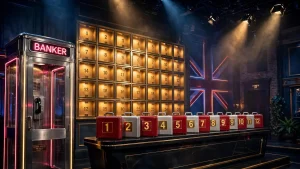
Deal or No Deal Casino UK: Slot Features Explained
The slot begins with a three-ring qualification condition, followed by an optional Top Up and...

Live Dream Catcher Casino UK: What to Know
The guide distinguishes studio-streamed dealer play from computerised games and explains what to check when...

Fastest payout online casinos in the UK: how to compare
A useful comparison defines the event being timed, its start and end points, and the...

French Roulette Online Casino UK: Rules and Odds
A practical guide to zero outcomes, payouts, table limits and the differences between French, European...

Fruit Machine Slots in the UK: How Online Play Works
A practical guide to digital reels, game features, demo play and the limits that shape...

Hi-Lo Casino UK: Rules, Odds and Game Types
Hi-Lo compares the next draw with an exposed card, while rules for ties, collecting and...

JetX Casino Game in the UK: What the Label Means
A clear look at how the slot label is used and why it cannot establish...

Live Casino Lightning Roulette in the UK
A practical guide to live feeds, roulette bets, table checks and the limits of demo...

Live Baccarat Online Casinos in the UK: How Play Works
Live baccarat pairs a dealer conducting the game in a studio with an online system...

Live Blackjack Online Casinos in the UK: Rules and Play
The guide links blackjack’s 21-or-less objective with live-table rules, casino terms, formats and practical play...

Live Roulette UK with English-Speaking Dealers
The format changes how results are produced and presented, while both games compare a number...

Mines Casino Game UK: Rules, Play and Offers
A practical guide to checking game rules, demo access, bonus terms and operator licensing without...

Monopoly Live casino in the UK: how it works
A practical guide to how live dealer broadcasts and betting controls work, with attention to...

Online Bingo in the UK: Games, Bonuses and Slots
Bingo is built around tickets, draws and patterns, while casino games have separate rules and...

Online American Roulette in the UK: Odds and Rules
Learn how the extra pocket affects roulette odds and how game format, betting terms and...

European Roulette Online in the UK: Rules and Returns
See how single-zero rules, payouts, table limits and game formats shape European roulette play. European...

Online Casino Games for Real Cash in the UK
A stake is committed before a game produces its result, while offer conditions and payment...

Online Casino Tournaments UK: Entry and Prize Terms
Tournament formats, scoring rules and prize terms differ, so check the conditions for the named...

Online Casino Without ID in the UK: How Checks Work
The guide distinguishes document-free signup language from a promise of never being checked, within UK...

Penny Slot Machines in the UK: Stakes and Play
Penny slots are classified by their lowest total spin cost, with guidance on demos, returns,...

Plinko Casino UK: Licensing, Offers and Payments
The guide examines licensing, promotional value, random outcomes and payment conditions rather than ranking casino...

Progressive Slots Online in the UK: Jackpot Guide
See how linked wagers fund jackpot pools and how those contributions relate to a slot’s...

UK Gambling Casino Sites for Slots: What to Check
A practical look at licensing, slot mechanics, withdrawals, bonuses and player controls on UK gambling...






























































































































































































































































