Bounty Reels Mobile Casino UK: Browser Play, App Claims and Device Checks
 Available in GB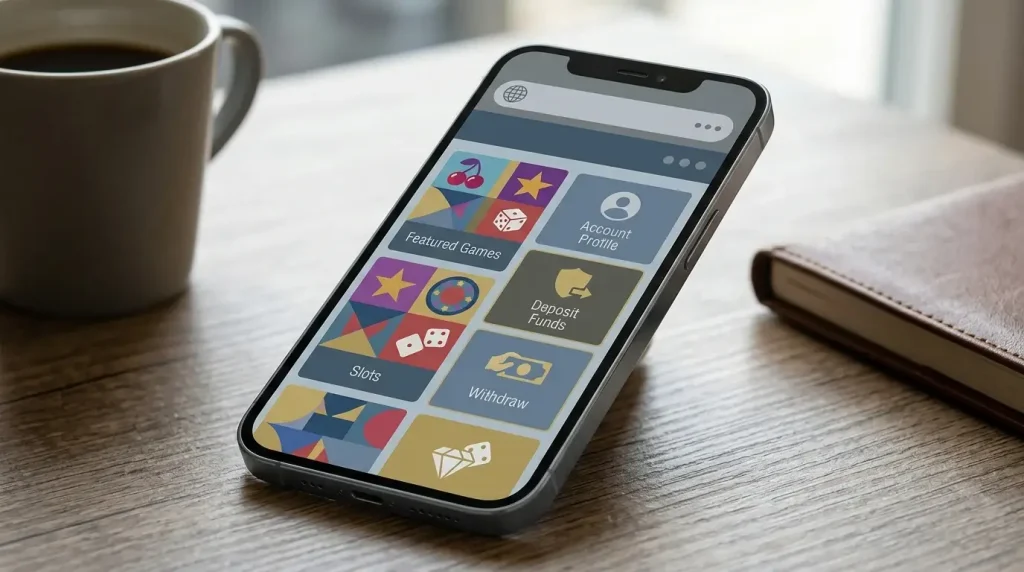
UK mobile access information
Bounty Reels supports mobile-browser access. That is the clearest mobile route for phones and tablets. A native Android app is not established as a settled feature, and an iOS app is not established, so there is no reason to rely on an APK or an app-store download to use the mobile service. The useful mobile questions are whether the browser layout works on the device, whether games and account controls remain usable on a smaller screen, and whether the current Bounty Reels account route can be identified before personal or payment details are entered.
Table of Contents
- Bounty Reels mobile in one view
- Browser play is the practical starting point
- What to look for on a phone screen
- Games on mobile depend on the category as well as the device
- A native app is not the same thing as mobile access
- How to handle an app download that appears under the Bounty Reels name
- Mobile account access should stay tied to the current Bounty Reels route
- The cashier matters as much as the game lobby
- Live casino adds extra demands on mobile
- Phone security is part of account security
- A simple mobile session checklist
- Browser bookmarks should follow the current account route
- Why browser play is the safer Bounty Reels mobile claim for now
Bounty Reels mobile in one view
- Phone and tablet route: mobile-browser access is available.
- Android app: native Android availability is not treated as settled.
- iPhone app: no native iOS app is presented as established.
- Downloads: no APK or app-store link is needed for browser play.
- Account access: mobile compatibility does not by itself identify the current operator endpoint.
Browser play is the practical starting point
Using Bounty Reels on mobile does not require a native application when the casino can be reached through a phone or tablet browser. The browser route keeps the experience close to the ordinary website: navigation, account access, game categories and cashier pages can all sit inside the same session. That is simpler than treating a download as the default route.
The mobile question should therefore begin with browser usability. A player needs readable navigation, controls that fit the screen and a path back to the account area without losing orientation. Native-app availability is a separate issue and should not be used as a shortcut for deciding whether Bounty Reels can be used on a mobile device.
What to look for on a phone screen
A usable mobile casino should make the important controls easy to reach without constant zooming or sideways scrolling. The main categories should remain understandable, the account menu should be accessible, and any balance or cashier information should be legible. These are simple observations a player can make on the device they intend to use.
Screen size changes priorities. Desktop pages can show many tiles and filters at once, while a phone often stacks them vertically. That can make search, provider filters or account navigation more important than visual density. The useful question is not whether the mobile layout looks identical to desktop, but whether the route to the desired game or account function remains clear.
Games on mobile depend on the category as well as the device
Bounty Reels has a broader casino catalogue of more than 3,000 games across slots, table games, live casino and crash games. On a phone, those categories place different demands on the screen. A slot may need clear spin and stake controls, while a live dealer table also has to fit streamed video, betting controls and table information into the same view.
The Bounty Reels games page covers the overall catalogue. Players interested in streamed dealer play can use the Bounty Reels live casino page for the live category. Mobile browser access makes both categories reachable in principle, but the practical fit still depends on the chosen game and device.
A native app is not the same thing as mobile access
The word “app” is often used loosely for mobile gambling. A website saved to a home screen can look app-like while still opening in the browser. A true native application is installed as software and normally has a clearly identified publisher and distribution route. Those are different products even when the icon on the phone looks similar.
For Bounty Reels, browser access is enough to answer the basic question of whether mobile use exists. Native Android and iOS availability should remain separate until there is a clear official route. That avoids turning an unfamiliar APK, mirror site or third-party download page into part of the account journey.
How to handle an app download that appears under the Bounty Reels name
If a Bounty Reels app listing appears, the publisher identity and its connection to the current operator route matter more than the presence of the brand name in an icon or page title. Do not enter account credentials into a download simply because it uses familiar colours, wording or casino imagery. A copied name can be easier to reproduce than a trustworthy account relationship.
The same caution applies to APK files. Sideloading software from an unrelated download page creates a separate security decision that browser play does not require. When mobile-browser access already exists, there is little practical reason to add an unconfirmed installer merely for convenience.
Mobile account access should stay tied to the current Bounty Reels route
The historically cited bountyreels.com address was parked or for sale on 12 September 2026. That observation does not establish a UK-specific restriction, but it means an old bookmark or old mobile shortcut should not automatically be treated as the current Bounty Reels account route. The Bounty Reels account access page explains the domain issue in more detail.
On mobile, saved shortcuts can hide the full address more readily than a desktop browser window. It is worth viewing the address bar before entering login details, identity information or payment data. Mobile compatibility and domain identity solve different problems: one concerns layout, the other concerns where the account information is being sent.
The cashier matters as much as the game lobby
A polished game screen does not make the whole mobile experience complete. A player may also need to reach deposit information, withdrawal status and identity prompts from the same device. Bounty Reels lists Visa, Mastercard and selected cryptocurrencies within its broader payment picture, while the exact live cashier options can depend on the account.
The Bounty Reels payments page covers cards, crypto and currency in detail. On mobile, the practical point is that the cashier should be readable and manageable before a deposit is made. If a payment step unexpectedly sends the player to an unfamiliar route, that deserves more attention than whether the lobby itself looks polished.
Live casino adds extra demands on mobile
Live dealer games combine video, table information and betting controls, so they use a small screen differently from ordinary game tiles. A phone may be convenient for a short session, but the player still needs to see the table state clearly and act within the available betting window. Connection stability matters more when the game is streamed in real time.
That does not make mobile live play unsuitable; it simply makes a quick device test useful. Rotate the device if the game supports it, make sure controls remain visible and avoid starting a longer session if the connection is unstable. The underlying account rules remain the same whether the game is opened on a phone, tablet or computer.
Phone security is part of account security
Mobile gambling can place login details, payment access and identity information on a device that travels everywhere. Basic device security therefore matters. Use a screen lock, keep the browser and operating system updated, avoid entering sensitive information over an unfamiliar public network, and sign out if the device is shared. These precautions are general account-safety measures rather than special Bounty Reels features.
If Bounty Reels requests KYC, identity material should only be sent through an account route you are comfortable belongs to the operator. The account and KYC pages cover that issue separately because a small-screen interface should not make a player rush through a document request they do not understand.
A simple mobile session checklist
- Use the browser route rather than searching for an unconfirmed app download.
- Confirm that the account address is the route you intend to use before signing in.
- Make sure navigation, balance information and account controls fit the screen.
- Open the game category you care about and confirm the controls are readable.
- For live dealer play, watch the stream briefly before starting a longer session.
- Read the cashier and withdrawal information before depositing from the phone.
- Keep the device locked and do not save sensitive account details on a shared handset.
Browser bookmarks should follow the current account route
A saved shortcut is convenient only when it points to the account route the player actually intends to use. Because the historically cited domain was parked on 12 September 2026, old shortcuts deserve particular caution. If the current route changes, replace outdated bookmarks rather than letting a familiar home-screen icon hide an old address.
Why browser play is the safer Bounty Reels mobile claim for now
Bounty Reels mobile-browser access is established, while a native Android or iOS route is not established in the same way. Browser play therefore gives UK readers the clearest path for assessing the mobile experience without adding an uncertain download. It allows games, account controls and cashier information to be considered on the device that will actually be used.
Mobile convenience should still sit beside the wider Bounty Reels questions about account access, payments and Great Britain licensing. The Bounty Reels UK review covers those areas together. A phone can make access convenient, but it does not change the underlying account, cash-out or regulatory position.