
Bounty Reels KYC UK: Verification, Documents and Withdrawal Checks
 Available in GB
UK identity and account information
Bounty Reels can require KYC or identity verification as part of the account or withdrawal process. No fixed Bounty Reels document list or processing time is stated here because those details can depend on the account and the request presented to the customer. For UK readers, there is also an important regulatory distinction: Gambling Commission licensees serving Great Britain must verify age and identity before a customer gambles, while the brand’s own Great Britain licensing position is covered separately on the trust page. The historically cited bountyreels.com address was also parked or for sale on 12 September 2026, so identity documents should never be sent through an old or uncertain route.
Table of Contents
- Bounty Reels KYC in one view
- Why KYC can affect a withdrawal
- Use the request attached to your own account
- Document safety matters because the historical domain is not serving the casino
- What a careful KYC submission looks like
- The Great Britain KYC rule is a regulatory benchmark, not a Bounty Reels procedure
- Identity checks and payment ownership can intersect
- Do not treat KYC as proof of licensing or safety
- When a KYC request appears during a withdrawal
- Self-exclusion and KYC solve different problems
- Keep a personal record of the KYC sequence
- What to confirm before sending KYC documents to Bounty Reels
- KYC in the wider Bounty Reels account picture
- Recommend
Bounty Reels KYC in one view
- KYC can be required: identity checks can form part of the account or withdrawal process.
- Document list: no single fixed list is stated for every Bounty Reels account.
- Timing: no fixed Bounty Reels processing time is stated.
- Great Britain benchmark: UKGC-regulated online gambling businesses must verify age and identity before gambling.
- Domain caution: bountyreels.com was parked or for sale on 12 September 2026 rather than serving the casino.
Why KYC can affect a withdrawal
Identity checks often become most noticeable when money is moving out of an account. Bounty Reels can require KYC, so a player should allow for the possibility that a withdrawal request triggers an identity step or that an account needs additional information before the cash-out can continue. That does not justify assuming a particular set of documents or a fixed completion time for every customer.
The Bounty Reels withdrawals page covers the payout process separately. Keeping the two topics distinct matters because a withdrawal can involve payment-method questions as well as identity questions. A KYC request tells the player what identity information is being requested; it does not by itself explain every delay or determine the final payout route.
Use the request attached to your own account
A KYC request should be read exactly as it appears in the account or communication connected to the account. Different customers can face different circumstances, and a document used by one person does not automatically become the requirement for someone else. That is why a list copied from a forum post or another player’s experience can create more confusion than clarity.
If the request is vague, use the account’s support route to ask what is needed before sending extra material. Bounty Reels supports English customer service, and the broader Bounty Reels account access page covers the account route and support context. Sending additional documents that were not requested can expose more personal information without helping the account move forward.
Document safety matters because the historical domain is not serving the casino
On 12 September 2026, the historically cited bountyreels.com address redirected to a parked or for-sale page. That does not show that Bounty Reels is unavailable to every UK user, but it does make old bookmarks and old document-upload links a poor basis for sending identity information. A KYC file can contain enough personal information to create serious privacy risk if it reaches the wrong destination.
Before uploading anything, make sure the account route is one you intentionally reached and that the request is connected to the account you recognise. Avoid sending documents to an address taken from an old review, an unsolicited message or a domain that no longer corresponds to the account route you are using. The security question comes before the document question.
What a careful KYC submission looks like
- Read the exact request and identify which part of the account process it relates to.
- Confirm that the upload or communication route belongs to the account you are using.
- Provide only the information requested rather than adding unrelated documents.
- Keep copies of what you send and note the date of submission for your own records.
- Do not alter identity documents in a way that makes required information unreadable.
- If the request changes, read the new instruction rather than assuming the earlier request still applies.
These steps do not create a Bounty Reels-specific document list. They simply reduce the risk of sending sensitive information to the wrong place or losing track of what has already been supplied.
The Great Britain KYC rule is a regulatory benchmark, not a Bounty Reels procedure
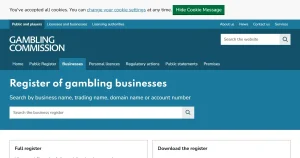
Online gambling businesses licensed by the Gambling Commission must verify a customer’s age and identity before the customer gambles. That rule is important context for readers in England, Scotland and Wales because it describes the standard that applies to UKGC licensees serving Great Britain.
The UKGC pre-play requirement should not be described as Bounty Reels’ own procedure merely because the brand can require KYC. Its exact document sequence and timing are separate account matters. The Bounty Reels UKGC licence page covers the local licence position, while this page stays focused on the identity process attached to an account.
Identity checks and payment ownership can intersect
KYC and payments often meet around the same account. A casino may need to understand who controls the account and how money moves to or from it. For the player, that means the name and personal details used in the account should be accurate and consistent with the information requested during an identity step. Deliberately inconsistent details can make an already sensitive process harder to resolve.
The exact Bounty Reels handling of each payment method is not set out here. Visa, Mastercard and selected cryptocurrencies appear in the wider payment picture, but the KYC page does not turn those categories into a fixed withdrawal rule. Payment compatibility belongs to the cashier; identity information belongs to the account request.
Do not treat KYC as proof of licensing or safety
The presence of identity checks does not establish the regulatory status of a casino. KYC can occur for different operational reasons, while a Great Britain licence is a separate entry in the Gambling Commission framework. A player should not assume that a request for a passport or other identity material means UKGC protections apply.
The reverse is also important. A difficult or time-consuming KYC request does not by itself prove misconduct. It can still be a serious practical problem for the customer, especially during a withdrawal, but the specific account sequence matters. Reputation reports can add context, while the regulator position and the individual account request remain separate issues.
When a KYC request appears during a withdrawal
If identity checks appear after a withdrawal request, keep the payout request and the document request as two connected but distinct records. Note what amount was requested, what payment route was selected, what identity information was requested and when each step occurred. That makes it easier to understand whether the account is waiting on documents, a payment decision or another account action.
Recent Great Britain user reviews about Bounty Reels are strongly negative overall, with occasional positive payout reports. Those experiences can be useful context, but they do not set the document requirements for another customer’s account. Use the request attached to your own account rather than trying to reproduce someone else’s sequence.
Self-exclusion and KYC solve different problems
Identity checks establish information about an account holder; self-exclusion is intended to restrict gambling access. One should not be used as a substitute for the other. Applicable UKGC remote licensees must participate in GAMSTOP; the separate trust and GAMSTOP pages cover how that regulatory requirement relates to Bounty Reels.
If self-exclusion is relevant to you, the Bounty Reels and GAMSTOP page explains that protection boundary. A KYC request should never become a reason to reopen gambling access or to search for a route around an active exclusion.
Keep a personal record of the KYC sequence
Identity checks involve sensitive documents and can overlap with a withdrawal, so a simple personal record can reduce confusion. Note the date a request appeared, what information was requested, when it was supplied and whether a new message changed the request. Keep those notes for yourself rather than sending extra personal material.
This is especially useful when several account messages arrive close together. It lets the player distinguish an unanswered document request from a later payment or support message without relying on memory.
What to confirm before sending KYC documents to Bounty Reels
Bounty Reels can require identity verification, but the safe starting point is the request linked to the actual account rather than a generic document list. Read what is requested, use an account route you trust, provide only the requested material and keep a record of what was submitted. The parked state of the historically cited bountyreels.com address on 12 September 2026 makes old links particularly unsuitable for sensitive uploads.
For Great Britain readers, keep the UKGC benchmark separate from Bounty Reels’ own process: UKGC licensees must verify age and identity before gambling, while the brand-specific regulatory assessment belongs on the dedicated trust page. That distinction is central when deciding which procedure is an account practice and which protection depends on licensing.
KYC in the wider Bounty Reels account picture
The Bounty Reels UK review places KYC alongside account access, withdrawals, the Great Britain licence position, mobile use and payment methods. Identity verification is one part of the account journey and does not by itself establish licensing, payment speed or current site access.
Recommend

Bounty Reels Games UK: 3,000+ Titles, Slots, Tables and Providers
Bounty Reels UK Guide UK games guide Bounty Reels has a casino catalogue of more...
Bounty Reels UKGC Licence and Trust Checks for UK Players
Bounty Reels UK Guide UK licence and trust guide No Bounty Reels UK Gambling Commission...

Bounty Reels Payments UK: Cards, Crypto, Currency and Cashier Checks
Bounty Reels UK Guide UK cashier guide Visa and Mastercard are Bounty Reels payment categories,...

Bounty Reels Mobile Casino UK: Browser Play, App Claims and Device Checks
Bounty Reels UK Guide UK mobile access informationBounty Reels supports mobile-browser access. That is the...

Bounty Reels Bonuses UK: Welcome Package, No-Deposit Offer and Terms to Check
Bounty Reels UK Guide UK bonus guide Bounty Reels uses a multi-deposit matched welcome package...

Bounty Reels UK FAQ: Licence, Bonuses, Withdrawals, Mobile and Tax
Bounty Reels UK Guide UK questions and answersThe main Bounty Reels questions for UK readers...

Bounty Reels Login and Registration UK: Account Access, Support and Current Site Check
Bounty Reels UK Guide UK account access guide The historically cited bountyreels.com address redirected to...